Richard Branson’s Necker Island And The Blockchain Summit (Part 2)

Blockchain summit on Necker Island

(See here for Part 1)

The vision of the blockchain summit was “We are gathering top thinkers in the world of blockchain, digital currency and bitcoin to help define the future”, and the organizers indeed put a very interesting group of people together. A combination of entrepreneurs, investors, journalists, regulation experts, scholars, laywers and academics. See here for a full list. The sessions were moderated by 3 people: First of all well-known economist, advisor to many heads of state, and author of The Mystery of Capital, Hernando de Soto. Next to that Michael Casey from the Wall Street Journal, and author of The Age of Cryptocurrency. And finally Matthew Bisshop, the US Business editor of The Economist magazine. Three very different persons, who did a great job moderating the event.

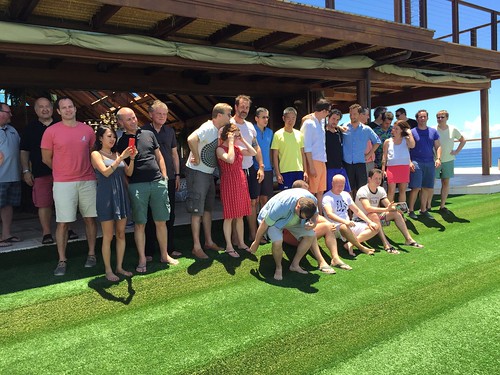
Preparing for a Blockchain Summit group photo on Necker Island


Preparing for a group picture

It was not a summit about bitcoin, but about the blockchain. That is the underlying ledger of bitcoin that is put together by the miners and that can be used for a lot more things than just keeping track of all transactions. This doesn’t have to be the bitcoin blockchain, it could be the blockchain of another cryptocurrency as well. For now that seems unlikely because of bitcoin’s network effect. But because of bitcoin’s bad name (mainly its association with Silk Road, Mt. Gox and the fact that people still seem to think it’s criminal money) another cryptocurrency could still appear and beat bitcoin. Or there could be different blockchains based on different cryptocurrencies. But in the end every blockchain is similar: it is a ledger and once you put something on it you can never take it off anymore. So to stay in Necker Island spirit: what happens on the blockchain stays on the block chain!

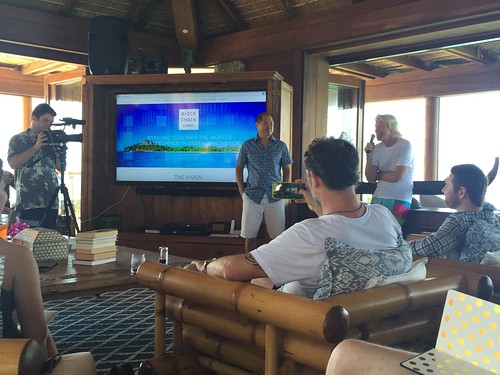
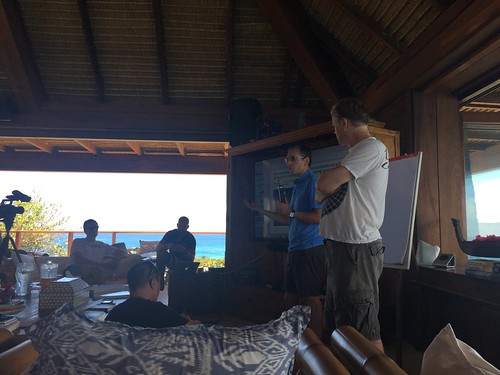
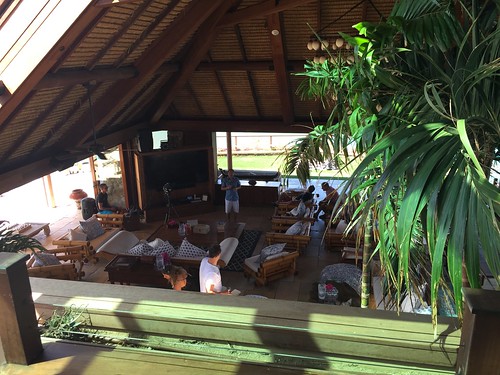
Blockchain summit at Necker Island

Most things that were discussed during the summit could be tweeted or put on social media. There were just a few topics that we agreed not to talk about (Chatham rules), so I won’t mention these here (mainly government related or related to specific confidential projects). Generally everybody was very open with sharing their information. All sessions were recorded, so you should be able to see most of the content online in the next couple of days.

Looking back, there were 4 main themes that came back regularly and that we discussed in detail. These are (in random order): identity, property rights, elections and the Internet of Things. A summary of the main ideas for each theme:

Identity: We discussed that the identity stack is a core application for the blockchain, it’s a critical piece for further development and needed for a trusted information economy system. This can be achieved by putting verified personal data on the blockchain. One project in this space is the Open Mustard Seed project, Patrick Deegan gave us a presentation about this. One of the other participants, Marshall Turber, is working on a similar idea. He is creating an integrity index using Ethereum, his project is called the Bucky Integrity Index.

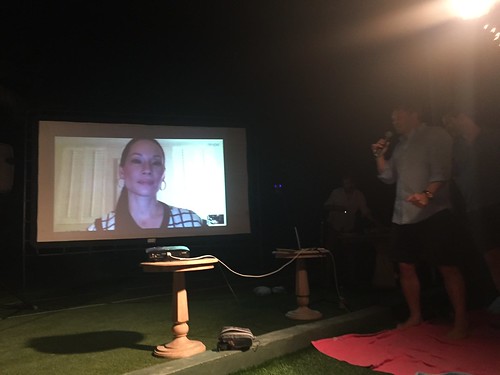
Lucy Liu skype interview


Actress Lucy Liu joined via Skype

Property rights: Hernando de Soto wrote in his book The Mystery of Capital that many assets in developing countries can’t be capitalized because there are no titles for them. Having property deeds could make a lot of dead assets into assets that can be capitalized, meaning that they can more easily be sold to outsiders or that they can be used as collateral for a loan.

Having a system for property rights can make a poor country grow, and can help the lower classes to start businesses and grow more prosperous. So far that was quite hard to do, however, but the blockchain suddenly gives us a tool to easily put these rights in a database and to (for example) build smart contracts on top of them. The company Factom is doing this for Honduras already, where all property deeds will be put on the blockchain. The potential of this is huge!

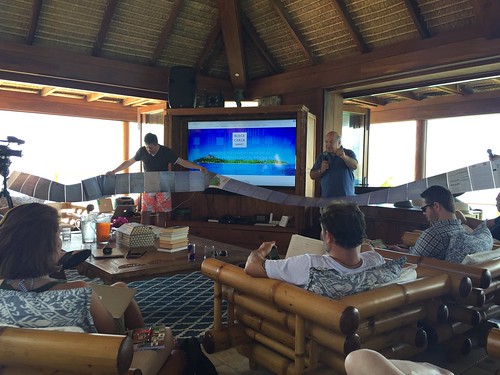
Blockchain summit on Necker Island


Hernando shows us the documents needed to get property rights in Peru

Elections: The blockchain can be used for voting, making elections complete transparant. You could watch the voting in real time, but you would not know who voted for whom. Someone mentioned that it can bring democracy to the world (I’m not a fan of democracy in every situation, for the simple reason that it leads to slower decision making, so that argument is not very strong IMHO), but if it can replace existing voting systems I’m all in favour of it. I would not be surprised if a lot of democratic countries would strongly resist this, and if that’s the case it is clear there is a need for blockchain elections. On a smaller level it can get people to participate in decison making, even for example for a parent teacher association.

Blockchain summit on Necker Island

The Internet of Thing (IoT): IoT will connect all electronic devices, it will do with the physical world what the Internet did for the digital world. All devices could be put on the blockchain and they could communicate with each other and even pay each other with smart contracts. The killer app for this will be the Economy of Things, meaning that exisiting ‘things’ can be used more efficiently. For example, at the moment cars are only in use about 4% of the time. If they can communicate with each other people can car share more easily, especially when autonomous vehicles will hit the market over the next years. Another example is that currently 20% of all trucks on the roads are empty, the IoT could reduce that number.

A list of some other things that we discussed during the past 3 days and things that stood out for me:

– It turns out that wallets may be one of the main hurdles for bitcoin adoption. Last year MIT gave all of its new students $100 in bitcoin and we talked a bit about what the effects of that. Soon a report about this will come out, but one of the important findings is that even MIT students (who are young and smart) struggled with wallets. Students that have easier-to-use wallets adopted bitcoin more than people who used ‘difficult’ wallets. Good news for Circle.com investors but not so much for Blockchain.info.
Corporates worry that competitors can hack their blockchain and that’s holding them back from looking at blockchain solutions. Education will be needed.
– Although it should be well known for most people in the bitcoin community, we should keep on spreading the word about the fact that bitcoin is not an anonymous currency. One of the speakers remarked: despite media saying the contrary, any criminal that uses the Blockchain is a moron.
– Organizations like Western Union and payday loan companies are almost criminal. What they charge is ridiculous and we should find a solution for the poor people that now rely on their services. Oliver Luckett of theAudience made a documentary for American Express last year and learned that the average payback of a $400 payday loan in Mississippi is $1400, after on average 2 years! These people just don’t have access to other sources of capital. They often can’t get a bank account and therefore need to use check cashing services ($7 per check) and to pay bills ($7 per bill). That adds up after a while. These are the people that should be interested in bitcoin accounts, because it can solve some big problems for them and will save them a lot of money.
– Although most people at the summit talk online about bitcoin on a daily basis only 300,000-400,000 people engaged in online conversations about BTC so far (since BTC was introduced to the world in 2009). We tend to think that it’s much bigger because we live in an echo chamber, but it also means that there is a huge opportunity out there that we need to grab.
– A blockchain idea that came out of smaller group discussions is something that we called the sensor chain. This is a low cost sensor to measure weather data all over the world (e.g. temperature, air pollution, water quality) and which data is automatically stored on the blockchain as part of the Internet of Things. In this way we can help to save the planet and get independent data on what is really happening in the world. The data can’t be hacked or manipulated (once it’s in the blockchain it stays in the blockchain). A very interesting idea that hopefully can become reality.
– Related to this are personal carbon credits on the blockchain, e.g. you get these credits if you have solar panels on your roof. There is enough solar power to deliver energy to the whole world, but there is no decentralized grid yet.
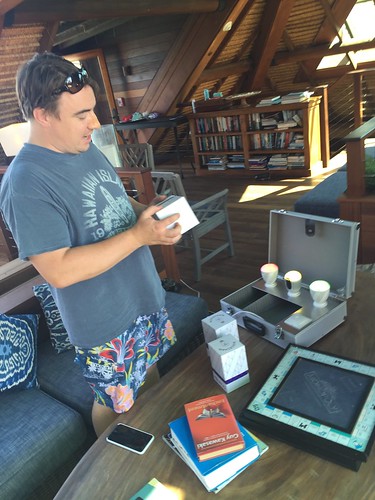
– A fun part of the summit was when Bitfury introduced a mining lightbulb with an iPhone app. The idea was born last year (coincidentally on Necker island as well) when a few people were trying to get a Raspberry Pi to mine bitcoins. It was so hard to set it up (it took them 4 hours) that Bill Tai made the remark that mining should be as easy as screwing in a lightbulb. Well, one year later the lightbulb is there. The Bitfury guys hooked it up to a wind power generator that they rigged on the rooftop of the Great House and managed to mine some bits using just windpower.

Bitfury lightbulbs at the Blockchain Summit on Necker Island

It was a fun side project for them, not something that is core to the business. When I posted it on Twitter it got retweeted hundreds of times and I got tons of questions about it, it seems people did not realize it’s not a serious product. The chip is super efficient, but given today’s hashrate and the low bitcoin price you should not expect to make more than your electricity cost. However, it’s a good way to start mining and it may inspire others to build other easy-to-use miners. The gadget (because that’s basically what it is) also has an interesting feature: there is some kind of random lucky draw for users, meaning that if you mine you may suddenly get the ‘petasplash’: suddenly all the hashing power of Bitfury’s network is redirected to your lighbulb, meaning that you can suddenly earn a good number of bits. A cool project, especially when you should hook it up to solar power or to a Tesla battery, so that you don’t pay cash for the electricity.

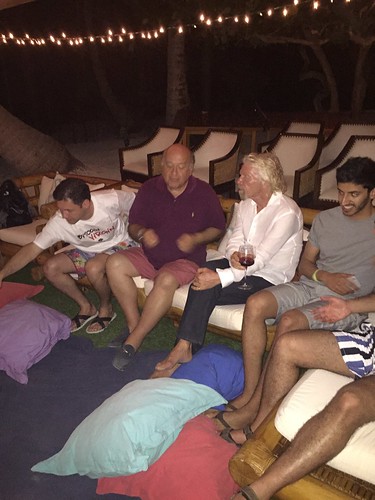
Richard Branson and Hernando de Soto


Hernando de Soto and Richard Branson

What’s next?

If you made it until here you will realize that we discussed a lot of things and that we have a lot of ideas. However, what really counts is the follow-up. What might happen over the next weeks and months? We talked about writing a white paper for congress, because it’s important that the politicians have a better understanding of the blockchain and what can be done with it. Spreading the word on social media is also important, I guess this blog post is part of that strategy. We also discussed that academia should be more involved, as the link between entrepreneurs and the government (MIT now already pays some of the core developers, they took over this role from the Bitcoin Foundation). For that reason a textbook for students (Michael Casey joked that his book might be a good fit) and a PhD course are needed. The group will stay in touch through email (this morning we already received all email addresses) and through Facebook group to try to achieve these objectives.

The blockchain summit is now over and looking back I think it was totally worth my time. It was not cheap to attend and it took me almost 2 full days of traveling, but the value I got out of it was much higher than the real monetary cost and the opportunity cost of the event. First of all I learned a lot and we came up with many new ideas. Next to that I met tons of interesting people whom I often only knew from the Internet. As an added extra I even found 2 interesting companies that I may invest in. I am glad I took the time out of my schedule to attend.

Valery, George, Bill and Richard, thanks for hosting this fantastic event!

Leaving Necker Island


All pictures of the Blockchain summit are here in a set on Flickr.

Richard Branson’s Necker Island and the Blockchain Summit (part 1)

IMG_7709

The past 3 days I spent on Necker Island, Richard Branson’s private island in the British Virgin Island, with about 30 other people who are active in the bitcoin and blockchain world. It was an amazing experience, not only because the island comes very close to what I think paradise would look like, but also because the summit was very productive and gave me lots of things to think about. If I would not be a venture capitalist and if I would not be involved in Uvamo I might consider to work on blockchain themes full-time. It is clear to me now that the blockchain is the future and is already starting to change the world.

This blog post consists of 2 parts, this is part 1 in which I will talk about how I experienced spending time at Necker Island. Tomorrow I will post the second part, which is about the blockchain summit itself.

Despite the fact that most of the companies that I was involved in in China were incorporated in the British Virgin Islands I had actually never been there. The group of islands, located about 150 km west of Puerto Rico, is more unspoiled than I had imagined. Road Town on Tortola (the place where most BVI companies seem to have their P.O. Boxes) is a small town, likely with a ratio of at least 10,000 companies per inhabitant. It’s a great tourist destination, although a bit off the beaten path (something I like).

IMG_7479

Getting there is not easy. From Vancouver I took the redeye to New York, then I flew to San Juan in Puerto Rico and from there I took a very small plane to Beef Island (which is connected by bridge to Tortola). At San Juan airport I already met several of the participants in the lounge and later a few others at the gate. Not all of us took the same plane, because each plane only fits about 8 people, but there are air services at least once an hour. On my plane there were 2 other participants, Mike, a bitcoin trader from Chicago and Danny who runs a fund that invests the money of the founders of Alibaba.

IMG_7498

After arrival at the BVI airport one of Necker’s staff picked us up and we took a minivan taxi to the marina (next to the airport terminal, we could probably have walked it in 5 minutes). I quickly understood that on Necker you don’t have to do anything, so even for a short walk transportation is always arranged. We arrived at the jetty where one of Richard’s 600 horsepower speed boat was waiting for us. We stepped on board and were immediately offered a drink. The bottle of champagne looked inviting, but because it was hot and we were thirsty from the long trip we opted to start with a cold local beer.

IMG_7508

Then we took off. First slowly because of all the anchored sailboats in the bay (which immediately inspired me to go sailing here one day), and then full power onto the sea. The guy who drove our boat told us that the boats go up to 90 km/h. Not sure how fast we went, but it was faster than I had ever gone on a boat. We jumped over the waves and it was actually hard to drink the beer from the bottle! I took a few pictures but had to watch out not to lose my camera because of the wind.

IMG_7547

About 20 minutes later Necker appeared on the horizon. When we got closer to the island a drone circled above the boat so the participants on shore could see who was arriving.

IMG_7626

Necker is a beautiful island, with white beaches, tropical vegetation, tons of wild life (including 7-8 feet long iguanas and a large flamingo colony) and of course 5-star accommodations.

IMG_7563

Danny and I shared a Balinese villa and after a short stop at the Great House (the main house on the island with a large lounge and great views), we got a electric golf cart to drive to our villa. Our place overlooked one of the beaches and a lake full of flamingos (they can be quite loud in the morning!). We quickly freshened up (our luggage was already in the room) and then went back to the Great House for cocktails with the rest of the group and for the official opening of the blockchain summit.

IMG_7654

Necker Island is about 300,000 m2, so it’s not a very large island (I sailed around it on a Hobie Cat in less than 30 minutes). Only about half of the island is cultivated, the other half still looks like most of the other islands (quite dry with not a lot of vegetation). The part where the 6 villas and the Great House (with 8 additional bedrooms) are located has undergone a complete metamorphosis, the vegatation is lush and Richard built decent roads. The beaches on this side are beautiful and there are several swimming pools and hot tubs. The best hot tub is on top of the Great House, the highest point on the island. There you feel literally on top of the world!

IMG_7684

You can actually rent the island, with prices started at $65,000 per day. That may seem expensive, but the island can house up to 30 people, so it’s actually quite reasonable for such a place. Of course you can’t just rent it for one night (the minimum seems to be 5 nights), so you’ll always be looking at at least a few hundred thousand dollars, similar to what you would pay for a super yacht.

IMG_7690

Many of the world’s celebrities have stayed at Necker over the years, although the staff don’t talk too much about who they have met. I understood that Google co-founder Larry Page got married on the island. He liked it so much that he bought the island opposite Richard’s. I sailed there to take a look, it seemed like a nice place to live as well.

IMG_7641

For $65,000 per day you get everything you can imagine. All food and drinks are included and the island has a total of 120 staff, so you don’t have to do anything yourself. The service is extremely good. Not only do you immediately get everything you want, but the staff also anticipated your needs.

IMG_7694

Most of the staff are in their 20s and clearly chosen because they love to party and because of their looks (especially many of the girls were stunning). Richard likes blond girls, that was clear! But they also work hard and seem to be very happy to work in one of the nicest places in the world. The manager of the island is a cool guy as well, my impression was that he runs the island very well.

IMG_7587

Virtually everything is possible on Necker and some parties go on through the night. When I left this morning at 6 AM the last people had just left the beach party (I wisely left the beach before midnight, I can guarantee you that spending almost a full day on planes with a hangover is an experience you do not want to have more than once in your life).

IMG_7675

At 6 AM we saw a staff member walking along the road with a big wound on his forehead. When we asked him what happened he said that while dancing a tree suddenly popped up in front of him! It’s all part of life on Necker. The previous manager on Necker did not allow the staff to drink or to (fill in the blanks yourself) with the guests, but that did not fit well with Necker’s culture so he only lasted for about a week! Anyway, what happens on Necker stays on Necker, but you probably catch my drift.

IMG_7601

The villas are very nice as well, on par with the best accommodations in other parts of the world. You have total privacy in the villa even when the island is ‘crowded’. The bathrooms are partially outside but they are built in such a way that you can see the island but nobody can see you. Of course that may change now that drones are on the island!

IMG_7659

The mini bar was well stocked with nice bottles of wine and champagne (all included in the price of course), but there was no opportunity to drink any of it. The only thing I drank in the room was espresso, all rooms have a very good espresso machines.

IMG_7702

Having your own private island seems like a nice thing, but after staying on Necker for 3 days I am not so sure if it’s really something I would like to have (assuming I could even afford it). I actually subscribe to a private island newsletter so I paid a lot of attention to the details of what it takes to live here. I think Richard made a smart choice to build small luxurious villas on the island and rent these out. Not only does it make living a lot more affordable (I am sure he makes decent money with the prices he charges, even with 120 staff on the payroll), but it’s also nice to meet interesting people all the time (most visitors seem to be celebrities or business people). Living on an island on your own will likely be quite boring after a few days already. Good to know that I can take one that off my bucket list.

IMG_7561

Richard Branson was the host, but he was not very much involved in the event. He showed up at some sessions and at some of the meals, but most of the time he was doing other things. Part of the reason was that he has recently become a grandfather for the first time (actually 3 times in the past 6 months, one of his kids had twins, and another had a daughter), and the grandkids were on the island as well during the event. Richard even took his 3-month old granddaughter to breakfast one day.

Richard is very charismatic and I think that’s one of the reasons of his success. He is always laughing and interested to talk to everyone. Interestingly he also seems very knowledgeable about the companies that he runs: during one breakfast I happened to sit next to him and he was talking to the lady opposite me. She is a bitcoin miner in her free time, but her day job is at Virgin Galactic designing the pressured spacecraft cabin and training astronauts (so she actually works for Richard). He seemed to know a lot about the details of the spacecraft when others asked questions about it and he wanted to see the latest pictures.

IMG_7713

Richard seems like a great guy to work for. He is also very sportive, I was told he runs and kitesurfs in the morning and in the afternoon I saw him playing tennis with his personal trainer.

IMG_7747

Anyway, back to the reason why we were at Necker. Although it may seem we only drank and partied that was certainly not the case, the main focus during the 3 days was on bitcoin and its underlying ledger, the blockchain. Tomorrow I will talk about the main themes we discussed, our findings and our plans for the future.

You can find part 2 of this post here.

A set of all pictures that I took during the Blockchain Summit is here.

I had my full genome sequenced

Understand Your Genome (Illumina)

In late 2013 I heard from our medical entrepreneur-in-residence (thanks Bojana!) that Illumina would offer its Understand Your Genome program in Canada for the first time: a whole-genome sequencing including a personal analysis. I had read a lot about genome sequencing and had considered doing a 23andme test before, but of course doing a full genome sequencing is much more interesting.

In February I had an appointment with a doctor at a private clinic to discuss the pros and cons of doing a complete DNA sequence. For me it was clear that I wanted to do it, but it’s good to have a chat with a medical doctor to understand the consequences: when you sequence your genome you might learn things you may not want to know. There could be some diseases that will kill you and for which there is no cure yet (e.g. Huntington’s disease), so if you find out that you have one of them it may deteriorate your quality of life significantly. The doctor agreed with me that it’s better to know in advance that you will get a certain disease so that you can be prepared for it, instead of suddenly getting it.

Illumina conference & full genome sequencing event in Vancouver

After that a blood sample was taken and used as the basis for the sequencing at Illumina in San Diego. A couple of weeks later my doctor called me and told me my results were in. For a moment I wasn’t sure whether it was good or bad news that he called me, but luckily he immediately told me that I was not at risk for any uncurable disease like Huntington’s or Alzheimer. I made an appointment with him to go through my test results, which turned out to be one of the most interesting meetings I ever had, because of the things that I learned about myself.

There are a couple of things that I am at higher risk for, but none is very serious and all of them can be prevented by small lifestyles changes (if needed). What I found interesting to hear and important to know, is that some kinds of medicine don’t work for me. For example, one of the most frequently used chemotherapies has no effect on me. Knowing that is extremely important in case I should ever get cancer. You may lose valuable time by doing a chemo that doesn’t work. Next to that I learned that my body metabolizes other chemo medicines much faster than other people, meaning that I would need 2-3 times the normal amount in order for it to be effective.
Understand Your Genome conference in Vancouver

Today Illumina organized an event in Vancouver for all people in Canada that had their genome sequenced. In total only 19 people had participated in the program, much less than I had expected. I think the price may have been one reason. Despite the fact that we got a lower rate than usual it was still not very cheap: US$ 5000 for the full sequencing incl. analysis, normally this is about $10,000 per person. Especially the analysis is very labour intensive we were told, the sequencing itself now costs less than $1000. In 2000 a full genome sequencing still took 10 (!) years and cost a stunning $3 billion. Technology changes very fast.

It was an interesting group of participants, all of them seemed to be quite successful in the business or in the medical world (incl. several people from universities) and all were of course very interested in genomics. I was one of the youngest in the group, something that doesn’t happen very often anymore.

Illumina is the leading genome sequencing company in the world and so far 482 people have gone through their Understand Your Genome program. I didn’t realize that so few people had done this, but it’s a good feeling to be among the first people in the world that got their genes sequenced. By the end of the year they expect more than 1000 participants already and after that it will likely increase exponentially.

Today’s event was partly to teach all of us about genomics and about what you can do with your results. But it was also the moment that all participants received their full DNA on an iPad. I can tell you that that was a special moment, from now on I can literally carry my DNA with me. Illumina developed a chromosome browser in which you can compare the reference genome with your sequenced genome. Variation from the reference means that something has changed, which means that you can have a higher risk for a certain disease, or that you will have certain characteristics/traits (they can be good or bad) that others don’t have.
Chromosome browser


Chromosome browser

For example, during the event I looked at DNA variations that cause red hair, that lead to a craving for alcohol, to obesity, to lactose intolerance and to whether you have Cherokees in your family. Luckily none of these genes had a variance for me, not surprising considering that I don’t have red hair, am not addicted to alcohol and am not obese. For me this was a highlight of the day and it is something that I will probably spend quite some time on over the next months. I want to understand myself better and it’s a lot of fun to surf the chromosome data and learn more about myself. If you’re interested to learn more, take a look at SNPedia.com, it has a list of many DNA variances and what their effects are.
After today I strongly believe that DNA sequencing will change medicine completely, and fairly soon already. It will revolutionize the way medicine will be practiced. No longer a doctor will need to look at symptoms, but he or she can look at your DNA for the cause of a disease.

Test for Down syndrome with amniotic fluid won't be necessary anymore with DNA sequencing

A prenatal test for Down syndrome with amniotic fluid won’t be necessary anymore with DNA

Medicine will change from treatment to prevention of illnesses. When you know that you will get lung cancer at 50 if you would smoke regularly (this is a variance I have actually, so I am extremely happy that I don’t smoke – and that I don’t live in smoggy China anymore!), you are very likely to give up smoking right away before it’s too late. If you know your body does’t metabolize certain things well, you can prevent eating them regularly. Or the opposite, if your body metabolizes them too quickly, you can take extra vitamins for that. It means we will stay healthy much longer and may avoid diseases we could not avoid without knowing our full genome.

Because costs go down so fast the expectation is that all babies in the US may get a full genome sequence upon birth by 2023-2024. Insurance companies may even pay for that because they will save a ton of money when doctors can see right away what disease a baby may have or may develop. It may seem science fiction to most people, but today’s event has opened my eyes: I have seen the future.

Awareness of what is possible is needed, most people have no idea what can be done with sequencing, so education is necessary. I expect people to be afraid of this, so they need to learn that having their full DNA available will have huge advantages for them. Think for example about personalized medicine: most medicines that you get in the pharmacy actually do not work for you, or at least do not work optimal. They are made for the average patient, a person that doesn’t exist in reality. Based on your DNA a pharmacy can make medicine just for you, using chemicals that your body can absorb and in the right amount.

Too bad I did not have this variance

And the more people get their genome sequenced, the more we’ll learn about what variances mean. Although I now have my complete DNA mapped out and could theoretically clone myself, the results of many of the variances that I have are still unknown. When new findings about gene variances come out I can immediately check if they have an impact on me. For example, a couple of months ago there was a study that found that wine may have a positive impact on your heart. That’s what newspapers reported without mentioning that it depends on a certain DNA variances. We looked the variance up today and unfortunately I did not have the it, meaning that I still love to drink wine but that it doesn’t make me more healthy.

Marc Andreessen famously said that ‘software is eating the world’, today one of the speakers changed that to ‘genomics is eating the world’. I agree with him. This is a truly disruptive industry that will make the world that we live in a more healthy and happy place. I am glad to be part of this pioneering group and will actively spread the word and get people to sequence their DNA as well.

If you can afford it, do it. It will change your life!

Busy month

Daily life is incredibly busy once again, I constantly feel that I need more than 24 hours in a day. I normally write my blog posts late at night, but now when I close my laptop around 11:30 PM I am often just too tired to spend time another hour on an article.

Lots of work and non-work related things happened this month, and many of these topics I would have written about if I would have had a bit more time. Therefore now a post with pictures of some of the highlights of the past 3 weeks.

Early May we went to the Mulgrave Gala Dinner, a fundraising event for our kids school with good food, wines, an auction, gambling and dancing. Last year I didn’t go because the Vancouver Marathon was the next day, but when I found out that this year’s marathon would again be the day after the gala I decided to go anyway. This year the theme was Bollywood, so many people dressed up in Indian dress and the food was Indian as well. We had a fun time and it was good to catch up with some of the other parents that we don’t see every day.

Grace and her girlfriends

Grace and some of her girlfriends at the gala dinner.

Mulgrave Gala 2015

Selfie during the evening

Some of the wines that I won in the auction

I won an auction for 70 nice bottles of wine, among others a 1997 Opus One and several even older high-end French and Italian wines. Enough to drink for the next couple of months!

Casino games at the Mulgrave gala

Black Jack at Mulgrave (given the strict gambling laws in Canada you couldn’t play for real money)

With Scott and Elaine in the start corral of the Vancouver Marathon

The morning after the gala (basically just a few hours later) I joined the  Vancouver Marathon. The weather was very nice this year, much better than last year!

Vancouver marathon course

The Vancouver Marathon course is beautiful, but the hills in the first part are killing. Luckily the last 10 km is flat, except for the last 500 meter to the finish line.

Walking into the start corral

The marathon itself did not go very well. I got an injury while running in New York in mid-April and that prevented me from training during the last weeks. It seemed the injury was gone, but it came back during the race. I did not want to give up, so I managed to finish but for the first time ever I ‘ran’ the marathon in over 4 hours (4:15 to be precise). Not something to be proud of, but quitting would have been even worse.

First Grouse Grind of the year (May 8, 2015)

The Grouse Grind opened the week after the Vancouver marathon and because I couldn’t run anymore because of my injury I decided to give the Grind a try 5 days after the marathon.

First Grouse Grind of the year (May 8, 2015)

The Grouse Grind had a lot of renovations during the winter, it’s now easier and less dangerous to do the climb to the top of Grouse Mountain. It’s also a bit less exciting to be honest, there are no real difficult part anymore.

First Grouse Grind of the year (May 8, 2015)

My legs were still quite tired from the marathon, but luckily I still managed to do the Grouse Grind in less than an hour (58 min). The week after I did another Grind in 57 min. Not great, but given how busy I am I’m fine with these times.

Swimming with Scott & Elaine

It was quite warm this May so the kids have been swimming a lot. I decided to teach Elaine how to swim, and she picked it up fairly quickly. In the picture above she is still wearing two inflatable arm bands, but she can now basically swim without them.

Pool time!

When she plays with Scott in the pool I want her to keep wearing one armband, just in case. She doesn’t see the risks of swimming yet and is overconfident in her abilities, so that may lead to accidents.

Skiing in Whistler (May 9, 2015)

Warm weather means great skiing weather in Whistler, so I took advantage of it during a weekend. Grace and the kids had brunch on a terrace in Whistler and I went up into the mountains for 2 hours of skiing. Whistler is just a one hour drive from our house, so it’s not too far for just a morning or afternoon in the snow.

Skiing in Whistler (May 9, 2015)

Most people don’t ski anymore in May so it was very quiet on most of the slopes. Of course many lifts are closed, but the snow was quite decent.

Skiing in Whistler (May 9, 2015)

The ski resort will be open until June 7 this year and over the summer months the glacier will be open for skiing. I may do some glacier skiing in July, especially because I have a ski pass that’s valid for summer skiing as well. I’ve never done that and it seems like a nice thing to do in the morning, while spending the afternoon on the water.

Opening concert of the U2 iNNOCENCe & eXPERIENCe Tour in Vancouver

The highlight of May was probably the opening of U2’s new world tour iNNOCENCe & eXPERIENCe 2015. We’re not huge U2 fans, but because Bono rented a house in our street we decided to get tickets anyway. We didn’t regret that, the tour was fantastic, one of the best concerts I have ever been to.

Opening concert of the U2 iNNOCENCe & eXPERIENCe Tour in Vancouver

The stage design was very different from other concerts. There was one main stage at one end of the arena, a smaller one at the other side, and a walkway stage in the middle, connecting both stages. A huge video wall in the middle of the arena could be lowered and the band played inside that video wall as well. Pretty cool!

45 year old port wine!

Business friends from Holland that I had not seen for years had flown in for the U2 concert and the next day we had some nice wines at our place. I tried some of the wines that I had won at the auction, among others a very nice 45 year old vintage port wine. It was nice catching up and among others discussing my favorite topic (Bitcoin!).

Coyote in West Vancouver

Sometimes we are reminded that we are very close to nature. Last weekend was such a moment, when we saw a coyote crossing the road in front of my car. I immediately stopped and followed the coyote onto a parking lot. The animal was not afraid of all, but I was glad I was inside my car.

Biz trip to Calgary

This week I went to Calgary for a due diligence meeting. I have been to many places, but so far I never made it to Calgary, so it was nice to take a look at the place (mainly from the air). The due diligence meeting went well, so it was worth the short trip.

IMG_7428

The past 2 days I spent at the Canadian Venture Capital Association annual conference. It’s a good way to meet everybody from the industry in just 2 days and to hear news about new deals and new funds. And of course to have good food and drinks! Last night the keynote was given by Joshua Foer (see picture), a journalist who wrote about memory championships and became so fascinated by them that the decided to join them a year later. And guess what, he won the US championship! He taught the audience some tricks on how to memorize long sequences of words (on the picture he has a list of 100 words that people need to memorize at championships) or how to remember people’s names. We also received a copy of his book (Moonwalking with Einstein), and I’m planning to read that on the plane next week. Fascinating!

IMG_7440

And finally, today Elaine had her 6th birthday. She was very excited about it and got lots of presents (mainly books that she wanted to have, but also some games and a Lego Friends set). She could choose what to eat for dinner on her birthday. I had expected french fries or something like that, but she opted for salmon pasta with a side of creamed spinach (an unexpected choice and an unusual combination).  Elaine is growing up so fast, I still clearly remember the day she was born. Sometimes I wish she would remain a toddler, but I actually also enjoy seeing her grow and learn new skills every day. Elaine, in case you ever read this, I love you!

The Bitcoin banks are coming!

Circle $10

Yesterday I was excited to see that Goldman Sachs and IDG (Tudou’s first investor) invested in Circle.com’s $50 million round. Having Goldman on board is a major milestone, they are the smartest kids on the block and when they invest in Circle it means they start to believe in Bitcoin and the blockchain. IDG is also an important company to have as an investor, because with their Chinese connections they should be able to open a lot of doors in China for Circle.

Circle wrote a blog post about the investment and from that article it becomes clear what they are planning to do. They are not just a bitcoin exchange and wallet anymore, but they are slowly becoming a bank. So far you could only hold Bitcoin on their platform, but now you can also hold your money in USD, just like on a normal bank account. And you can transfer this money to other Circle accounts (in USD or in BTC) much faster and cheaper than you could do it through a normal bank.

And because Circle plans to enter China, it means that you will eventually be able to put Chinese RMB on your Circle account and transfer that in seconds to a USD account in the US (or any other country where Circle will be active). This is a major step in the disruption of the remittance industry. I am surprised that the Western Union stock only went down 0.5%, after this announcement, I would be very worried as a WU stockholder.

But also banks should watch out because an important part of their business can be gone in a matter of 2-3 years. And it won’t be just the remittances: if people transfer money they normally leave part of it on their accounts, which is then used to lend out to other bank customers and to create new money by fractional reserve banking.

OKCoinVisiting the OKCoin office in June 2014

The superwallet that Circle created is actually not the first in the world. China’s leading exchange OKCoin launched a similar product a couple of days ago, but it did not get as much press as the Circle announcement (full disclosure: my wife is an advisor to OKCoin). OKcoin also lets you do cheap and fast international transfers and allows you to hold USD, RMB or BTC in your wallet. So in the Chinese market they are far ahead of Circle, because Circle can’t offer RMB yet.

The blockchain is an excellent mechanism to replace the old way of transferring money, and soon there will be a lot of other companies doing international remittances using Bitcoin technology (e.g. Melotic is already doing this, and Abra and ZipZap will launch in the near future). How many of these companies will also allow you to hold multi-currencies in wallets remains to be seen, but it’s clear that Circle and OKcoin are the first Bitcoin companies that are evolving into bank-like institutions with bank accounts and remittances.

OKCoin is actually a lot closer to a traditional bank already, in the sense that you can do more than just hold and send money. OKCoin now already offers futures, margin trading and even P2P lending. They still operate a bit under the radar for most people outside China, but I think they are quietly growing into a financial giant. The Bitcoin banks are coming!

Initial impressions of the Apple Watch

My Apple Watch

For the past 2 days I have been wearing my new Apple watch, the 42mm sports model. I decided to buy just the basic model because, except for sports, I didn’t think I would wear it a lot. The main reason for buying it was to understand the device and its capabilities, so I can better spot potential business and investment opportunities.

My Apple Watch arrived

My initial impression upon opening the Apple watch box was that the watch looked okay, but that it was nothing special. Before I could use it I first had to install the latest iOS on my phone (I hate that) and then I had to sync my phone with my watch. Syncing took quite some time, but finally about 30 minutes after opening the Apple Watch package I could start using the phone.

As usual I don’t read manuals but try to figure out how the watch works myself. With just a crown and one other button that should be easy, right? Wrong… If you start using the Apple Watch better view some of the short videos on the Apple site first, that will save you a lot of time and frustration. I figured out most of the things eventually, but it was painful. Unintentionally, I almost called my parents in Holland in the middle of the night because their home number is stored under favorites (the menu where you get to when you press the 2nd button), but luckily I could stop it before it would have woken them up at 3:30 AM…

My Apple Watch arrived

My opinion after 2 days: it’s a fun watch that can do a lot, but it won’t replace my other watches any time soon. It very much feels like a first generation device, there are just so many things that need to be improved. It’s like going from an iPhone 6 to a first generation iPhone but with a much smaller screen.

I figured out quickly that the watch can’t do much without your phone. If you turn off your phone or your phone is too far from the watch most apps won’t run. You can still see the time and you can change all the settings, but that’s about it. I want to use it for running, so I hope it has a built-in GPS because I don’t want to bring my phone on all my runs as well (I didn’t check this yet, but after I turned off my phone just now the maps function didn’t work anymore, so I have my doubts).

I try to like the watch, but there are just too many things that don’t feel right. The screen turns itself off way too quickly, and I have not figured out how to change this (probably you need to do this on your phone, the settings menu on the watch does not seem to allow you to change this). Luckily the watch does not ask you for your passcode each time the screen is off, at least as long as you wear the watch. Tip: if you play around with your watch, wear it while you do so, otherwise you’ll keep on putting your passcode in.

Apple Watch

The watch is also very slow, especially when you compare it to an  iPhone. It’s like being used to broadband Internet and then being forced to go back to dial-up. Maybe this is because the apps are not optimized for the watch yet, but if this doesn’t improve I won’t use a lot of apps on my watch.

For example, my favorite chat & communications app is WeChat. Just launching it takes ages. Going from the home screen to moments (the WeChat ‘timeline’) took exactly 15 seconds just now. That’s just not acceptable in 2015 and I can’t believe Apple accepts this.

On Saturday I tried to pay for my coffee with the Starbucks app on my phone, but after waiting for 20 seconds to load the app I got my phone out and just paid with the Starbucks app on my phone. I was almost embarrassed, because there was a line of people waiting behind me. Later I figured out that the current Starbucks watch app may not even let you pay yet (I could not find how to do it after it loaded). Very strange.

Dianrong.com app on my Apple Watch

Also standard Apple apps like the weather app are slow. Not as slow as some external apps, but to load the local weather forecast takes 3-4 seconds. We’re probably all spoiled, but when you’re Apple and offer premium products at premium prices the user experience should be premium as well.

I don’t dislike the watch, but I have my doubts whether I’ll use it a lot. It just doesn’t look as good as my other watches and the usability is not as good as expected. If you get constant updates on Facebook, Twitter and Instagram you should make sure to turn off notifications, otherwise the constant pings and vibration will drive you nuts. But on the other hand, what’s the added value if you don’t get notified, you might as well get your phone out every 10 minutes or so to check on the latest updates.

Tudou app on my Apple Watch

What I like about the watch is that the battery life is not as bad as I had expected. After wearing the watch for at least 13 hours today I still have over 50% of battery power remaining. So at least it’s unlikely that I would need to recharge it during the day, as I often have to do with my iPhone. But then again, I didn’t watch any videos on my watch, I only made one or two phone calls on the watch and I didn’t play any games, so maybe the battery will drain a lot quicker if I start using it differently.

I also like that it’s at least partially waterproof. I went for a swim tonight while wearing the watch, and only while swimming I realized the watch may not be waterproof (you also don’t jump in the pool with your phone). But while swimming I immediately checked it and it worked fine – and it still works fine a few hours later.

For me the watch is not more than an extension of my phone. Most calculations are done on the phone, the watch only has 8GB of storage, and many watch apps just tell you to go to your phone to see or read more. I was aware of this, but you don’t really realize it until you start using the phone. It’s a pity, but I am sure in future generations of the watch Apple will solve this, giving us all reasons to buy every single update of the watch. I’ll wear the watch for a few more days, but I’ll likely switch back to my normal watches again after that. My verdict so far: 6 points out of 10.

The state of the P2P marketplace lending industry

New York, view from hotel

I just got back from a week in New York City for meetings with the Uvamo team and for the Lendit 2015 conference. Lendit is a conference focused on the P2P lending industry (nowadays called marketplace lending), and this was the third year the conference was organized.

I had been to the inaugural conference in NYC 2 years ago, at a time when marketplace lending was still something that was relatively small and unknown. I had been investing in LendingClub loans for quite some time already by then, but most traditional bankers I met during that time told me that it was impossible to make consist good returns on a loan portfolio (I was, and am, making a net return of about 8.5% per year). It’s always when things are new that people don’t understand it or don’t want to understand it, so I didn’t argue too much – but I did blog about it a couple of times.

During the first conference the organizers had expected about 200 participants, but the final tally was 375 people. I thought that was quite a lot, but the year after the Lendit Conference in San Francisco had almost 1000 particpants. Suddenly it had become a big event, although marketplace lending was still not mainstream.

But the successful LendingClub IPO in December last year changed things significantly. Suddenly the skeptics realized that marketplace lending is here to stay and that it’s a real alternative to borrowing from banks. I had expected about 1500 people at this conference, but when we had dinner with the organizer the night before the conference he told us almost 2400 people signed up and they had to close the registration.

The conference itself was great. Because I am on the board of Chinese marketplace lender Dianrong.com I follow the space closely and I got to know quite a few people in the industry over the past 2 years. The industry has matured a lot obviously and the start-ups from 2 years ago are now big companies. LendingClub is a $8 billion dollar company and competitor Prosper just closed a private round at a $1.9 billion valuation. They are not banks yet, but they may one day become something like a bank is now.

Lendit 2015 New York City

Banks now even want to partner with marketplace lenders. LendingClub CEO Renaud Laplanche for example announced on stage that they started a $150 million cooperation with Citi. Two years ago this would have been unimaginable. And Larry Summers (who is even on the board of LendingClub!) explained in his keynote that the future of finance consists of online marketplaces. He believes that 10 years from now 40-50% of all current bank lending will go through online marketplaces. That means that there is still a huge upside.

Larry Summer's speech

As part of the Lendit conference there was a special China track and there were a lot of Chinese participants. It was probably a good wake up call for many people in North-America to see that US market leader LendingClub is much smaller than some of the top Chinese players. In China the market is booming, it’s incredible. I mentioned this already in another blog post last week where I talked about Dianrong, but growth rates that people in the US can only dream of are normal in China.

Lendit 2015 New York City

China’s P2P market is many times bigger than the US market, it’s even bigger than all other P2P markets outside China combined. Hard to believe? When I see the monthly Dianrong figures I believe it, I have seen the company grow from its first loan 2 years ago until where it is now, that is simply not possible outside China.

Soul Htite at Lendit USA 2015

One big difference with the US is that Chinese P2P lending companies not just do loans, but they build whole new product categories around it. For example Dianrong, also has a fast growing banking solutions division, that works with some large banks to help them with their technology. Many Chinese lending companies also have a wealth management division, something you don’t see in the US. As Dianrong CEO Soul Htite explained on the main stage at the conference, this is a normal thing for Chinese companies, not just in the P2P lending space. One reason is that you start from scratch in China, there are not many existing tools that you can integrate. E.g. when Alibaba started they had to figure out logistics and payments themselves, Amazon could use existing services for that.

Soul Htite in the China panel at Lendit USA 2015

The extreme competition is another reason that Chinese companies have to innovate faster than their US counterparts. Competition in the US certainly has increased, and CEOs of the leading companies don’t freely exchange information anymore (during a CEO dinner on Monday night the CEOs of Prosper and On Deck did not even mention their partnership to the other participants, even though it was announced pre-market the next morning!). This reminds me of my time in China when I learned the hard way that Chinese companies would not even consider sharing any information with the competition.

I sometimes wonder what would happen if Chinese marketplace lending companies would become active in the US. It’s not happening yet, but I think they could make life very difficult for the leading players. For now they have no real reason yet to move overseas, the opportunity in China is still huge. In China loans are not a replacement for bank loans, but many people or SMEs have no other source to get credit capital. There is still a huge untapped market there, especially now that a large portion of lending and investing in China is now happening on mobile devices.

What’s next? There is a lot of innovation in the financial marketplaces and many niches have been covered over the past 2 years (e.g. student loans, real estate, car loans). But many are relatively small opportunities because they are niche. I think some of the leading players will start acquiring niche players and I think a lot more will go public soon. I think they may turn out to be good long term investments, although they have to show consistent high growth for years to come in order to live up to their multiples. I see more internationalization, meaning US companies moving overseas, or non-US companies expanding to the US. This is already happening, but at a small scale. As for Chinese companies, I don’t see them expanding to the US soon, but don’t be surprised if they suddenly turn up in other Asian countries that are closer to their home base. Exciting times!

Job opening: 2 analyst positions at CrossPacific Capital in Vancouver

View from the CrossPacific Capital office in VancouverView from the CrossPacific Capital office

Our fund CrossPacific Capital (www.xpcp.ca) in Vancouver is expanding rapidly and we are now looking to hire 2 analysts for our Vancouver office. You will work directly with the managing partners, Frank Christiaens and myself.

We are different from other venture capital funds in that we work closely with Chinese strategic investors, limited partners and VC funds, and that we are mainly looking for exits for our portfolio companies in Asia (especially in China). Therefore it’s a prerequisite for candidates to have lived and worked in Asia for at least 3 years. Because there is a lot of communication with China, our analysts have to be fluent in Mandarin Chinese (spoken and written).

You will need to be able to work independently and be able to determine your own work priorities. If you can handle it you’ll get a lot of responsibility (we’ll coach you of course), more than at this level in most other VC firms.

CrossPacific Capital (XPCP.ca) Christmas party 2014CrossPacific Capital office in Vancouver

If you plan to make the switch to venture capital this may be the right job to get into the industry. You will join pitches by companies, do due diligence on them and help us in the valuation and decision making process. We are a small organization, so there are no layers between you and the managing partners, meaning that you have a lot of direct exposure to what happens in and around the firm.  Frank and I tend to be quite direct (we’re both originally Dutch…), but you’ll probably get used to that quickly. Occasional travel may be required, depending on projects and clients that you work with.

Our office is in the the middle of Gastown in Vancouver, surrounded by bars and restaurants, on the top floor of a heritage building with great views over Vancouver harbour and the North shore mountains. Several of our portfolio companies are in our office, and because of our open office environment you’ll have a lot of contact with them.

Our analyst Ms. Bing Dai, who plans to do a start-up as the next step in her career, said on her Facebook about her current job: “I learned more about entrepreneurship, technology and human interactions during the past two years at CrossPacific than any period before. A great environment to hang out with amazing people around the world and experience what starting/investing in tech companies is actually like.” Hope you don’t mind me copy/pasting your text Bing 🙂

The official job ad as posted on our website:

Company

  • CrossPacific is an asset management and advisory firm, strategically headquartered in Vancouver, BC Canada, North America’s Gateway to Asia.
  • CrossPacific invests in Canadian and select US technology companies and creates value through cross-border business expansion into China. CrossPacific also invests in companies that would be investment targets for Chinese companies looking to expand their presence in North America.
  • CrossPacific is managed by 2 Managing Partners and 1 CFO. The team is strenghtened by 2 Venture Partners, Enterepreneurs-in-Residence, and Advisors.


Responsibilities

  • Market Research
  • Financial Analysis
  • Due Diligence Support
  • Business Developmemt Support


Required Expertise

  • Having worked in Asia for a minimum of 3 years
  • Strong analytical and quantitative skills
  • Excellent Excel skills
  • Eager interest in technology
  • Deep knowledge of certain technologies
  • Prior start-up experience a plus – not a requirement


Education Level

  • University level Master degree from recognized university, preferably with an undergraduate degree in engineering or science
  • Native Mandarin
  • Fluent English
  • Other languages a plus


Compensation & Perks

  • Base salary negotiable
  • Bonus as a function of value created for the Fund
  • MSP
  • Medical and dental insurance
  • Awesome Gastown office with waterfront views, accessible by Canada Line, Expo Line, Millenium Line, and many downtown buses


CONTACT: Ms Rui Habib, rui@xpcp.ca

A Few Days In China: Some Thoughts And Observations (Part 2)

XintiandiShanghai, view over Xintiandi

After some impressions about life in general in my post yesterday, today some more business related topics that I noticed during my trip to China last week.

Valuations
Company valuations are going through the roof, especially private company valuations. When Tudou raised its first round in late 2005 valuations were probably 10% of what they are now. At one time Tudou raised the largest round ever for a Chinese company, which was $57 million at that time. Now that number is just peanuts and many companies have raised hundreds of millions in later stage rounds.

Although in Silicon Valley valuations are also extremely high (e.g. Uber @ $40 billion and Snapchat @ $19 billion), I have the feeling that Chinese tech companies tend to get ever higher valuations based on the same numbers. I have no data on this, but that’s just what I hear when talking to local VCs. One reason may be that the Chinese market is potentially much bigger than the US market, although most Chinese have a lot less earning power. And for Chinese companies it may be easier to go abroad (with the right management teams) than it is for US companies to enter China.

Buying R&D
A relatively new trend is that Chinese companies are now actively buying R&D from outside China. With growth rates going down to about 7% this year they need to find other ways to grow faster, and foreign intellectual property is a good investment for that. We see it a lot at CrossPacific Capital and several of our portfolio companies are in discussions with Chinese buyers. Chinese companies are especially looking for companies that can deliver revenue right away, so products that can immediately be integrated or sold in China.

The valuation of these companies mainly depends on the current product portfolio and less on the value of the IP for future products. Chinese business men want to see results now, nobody knows what will happen in 4-5 years so that’s less important. Generally valuations for these companies are a lot higher in China than in North America, meaning that if you can identify the right products or technology you can make a good return on your investment. However, valuations are not as high as Chinese Internet and tech companies.

Marc, Soul & Scott at the Dianrong officeMarc, Soul and Scott at Dianrong’s Shanghai HQ

Dianrong
One important reason why I was in China was for a Dianrong board of directors meeting. Dianrong is a Shanghai-based P2P lending company, comparable to LendingClub or Prosper, but only focused on China (for now) and therefore with Chinese characteristics (shorter loan duration, higher interest rate etc.). The company is also active in banking solutions for traditional banks.

When I first met Soul Htite, the founder and CEO of Dianrong, a few months before I left China in 2013 he was so convincing about his plans that I fairly quickly decided to invest. That was a good decision because Dianrong turned out to be one of the fastest growing companies I have ever been involved in. It’s unbelievable how innovative the company is and how it manages to handle its growth. The company is obviously still privately held, so I am not able to share any data here, but trust me that the figures are extremely impressive.

In my opinion, one major strength Dianrong has is the management team that Soul put together. Many of the executives are graduates of top US schools like Harvard, MIT, Stanford or Wharton, or from Chinese top universities (or both). The team understands both the Western and the Chinese financial and Internet world and that makes them stand out from many of the other Chinese P2P lending companies.

Dianrong is the type of company that could conquer the world from China. Not just South-east Asia like some ‘traditional’ Chinese Internet companies are doing already, but possibly also the Western world. Yes, I am biased of course, but keep an eye out for them!

WeChat
While many people in North-America have never heard of it, WeChat (微信) is now the only app you need to do business in China. Originally a messenger app comparable to WhatsApp, it has grown into a mobile-first combination of the Facebook timeline (with built-in privacy!), Messenger, Skype, a business sales & marketing platform, and a group communication tool like Slack. Companies like Dianrong rely on WeChat for communication, and in many instances it has replaced email. You can run a company on WeChat these days.

I use WeChat a lot in Canada as well, but it’s not really taking off yet among people that don’t have a lot of connections with China. I hope that will happen though, because it’s extremely useful and a great way to stay connected to people that you meet. Next to exchanging business cards you now just scan each others QR codes to get connected. If you want to do business in China make sure you have WeChat installed on your phone.

The future of retail
If you want to understand how retail in the West will change, come to China first. Already a couple of years ago people were ordering everything online and that has only increased. Real time delivery for (almost) free is the norm and I believe that China might be the first country where large supermarkets and other stores may disappear. There are still a lot of shopping malls, but if this trend continuous they will be mainly for high-end brands (where the retail experience is important) or just for window shopping.

It’s hard to imagine how fast online retail has grown. In March 2013 when I left China McKinsey estimated that by 2020 Chinese online retail would be between $420-$650 billion. Guess what, in 2014, so just one year later, online retail was already at $450 billion in China. I don’t want to criticize McKinsey too much, but they clearly should do their homework a bit better and learn about exponential instead of linear growth (their models worked with 15-20% growth per year and were likely based on 2011-2012 data, but real growth in 2013-2014 was over 50% per year).

The fast growth is partly because of convenience, because urban Chinese work longer hours than people in Europe or the US and therefore have less free time for shopping, but also because of traffic jams, lower car ownership and pollution. If you know it will take you a long time get to a large supermarket, you don’t have a car or if it’s very smoggy outside you might as well order everything online. And don’t forget the secondary and tertiary cities where people also have a lot more disposable income nowadays, but where lots of products are not for sale in offline stores.

The next big business opportunity: Senior care
If you want to catch the next big wave in China (outside of tech), look at opportunities in senior care. There are many reasons why this is such a huge growth market and I could probably write a complete blog post about it, but I’ll just list the main ones here:
– Most Chinese below 40 don’t have brothers or sister because of the one child policy. Traditionally Chinese take care of their parents, but if 2 people have to take care of their aging parents next to their jobs and kid(s) that can be a major burden.
– Urban Chinese don’t have large apartments, so taking care of their parents is not always possible
– Younger Chinese are more affluent and can (and are willing to) pay for senior care
– Sending your parents to a senior home is not a taboo anymore
– It’s difficult to find good senior homes, at some of them wait lists can be decades

My friend Ninie Wang saw this opportunity already back in 2003, right after graduating from INSEAD. She was one of the very first but the sector is now growing fast, but there are still a huge opportunities for anything related to Chinese senior care.