Vacation in The Netherlands

This weekend I returned from a two week vacation in The Netherlands with my family. I really enjoyed it, and finally managed to relax a bit after an extremely busy and stressful summer at work. The trip started off with an exhausting flight from Shanghai to Amsterdam. Almost 12 hours with a 3-month old baby and a 20-month old toddler is not something I’d recommend. We managed, but I have not often been so tired after a flight. Normally I read several papers or books and I work for a couple of hours on these intercontinental flights, but this time I managed to read only 30 pages in a novel and I did not touch a paper nor my laptop. I only spent time with my kids, for example making walks with Scott through the plane: especially the stairs from the business class down to economy class were his favorite: I think we walked up and down at least 20 times. We occupied the first row in business class, so Scott had a lot of room to play and Elaine had a cradle to sleep. I honestly cannot imagine doing this kind of flights in economy class with 2 kids below 2 years old. Hopefully it will get a bit easier when they are 1-2 years older.


In Holland we mainly stayed with my parents, so my wife and I could relax a bit. They helped us to take care of the kids, so I could finally read a couple of books. But of course I also spent a lot of time with my babies, something I normally don’t have much time for (I generally leave home around 8 AM and normally don’t get back until 12 hours later, meaning that I’m just in time to see them waking up and putting them to sleep at night). I played a lot with Scott in my parents garden, where my dad had built a sandbox for Scott and even set up a tent for him to play in. And I changed more diapers and gave more bottles during the past 2 weeks than in the past 20 months, even though my wife and parents still did the majority of this work. It was fun to spend so much time with Scott and Elaine, and I realize I should probably try to spend more time with them. They are only young once and they grow up so quickly.


During the 2 weeks I tried to keep work to a minimum, meaning I spent about 2-3 hours per day behind my computer or on the phone. There were a lot of issues in China, and I did not feel at ease if I would not spend at least some time every day checking my emails and reacting to urgent things. I originally had the idea to put a vacation notice in my email (lots of people in Holland seem to do that nowadays, but in China it’s not very common), but I decided I would check my mail anyway and might as well answer the most urgent ones. The good thing was that there was no pile of 100’s or even 1000’s of emails waiting for me upon return, and today I could start with meetings right away.

During the holiday I visited several friends, for example my high school classmate Almar and his partner Sylvia in Heemstede. We had a nice day there, among others we went to the beach in Zandvoort, walked around on the Kopje van Bloemendaal (a high dune), and did some shopping plus dinner & drinks in Haarlem. It was my first time to visit Haarlem; for some reason I had never visited the city, despite the fact that it’s only 15 km from Amsterdam. I’ll for sure go back there again. 


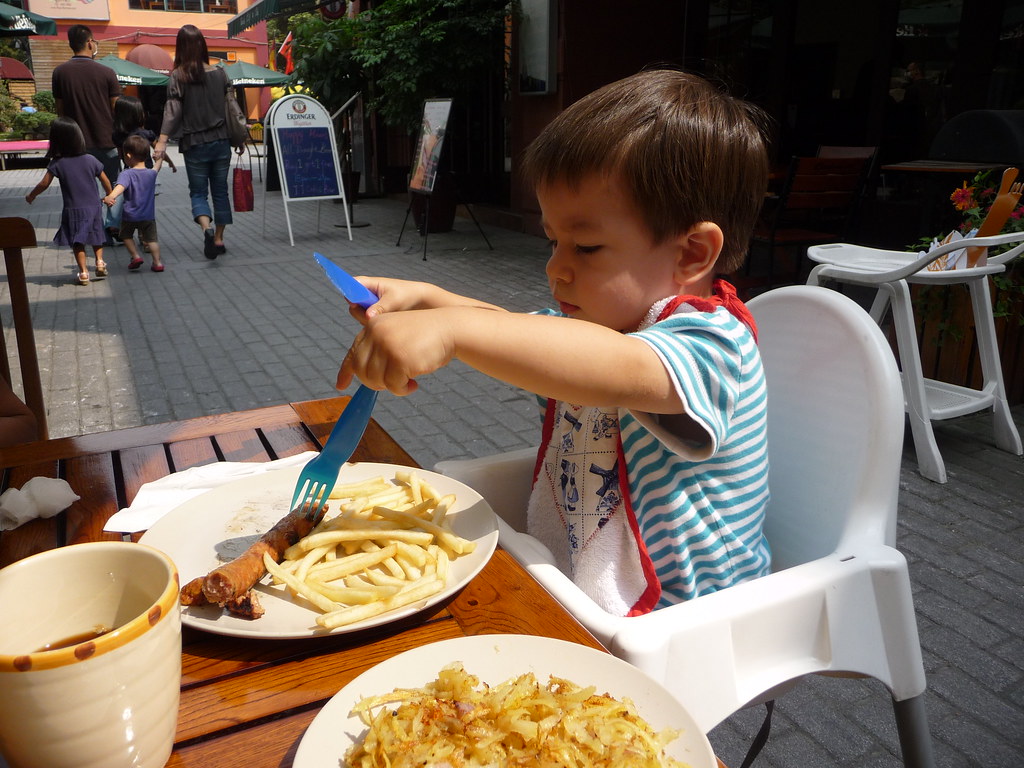
We also took Scott one day to the Openluchtmuseum (Open Air Museum) in Arnhem. A very nice place in the woods north of the city, where traditional houses and buildings from all over Holland were (re)built and where you can learn a thing or two about life in Holland during the late 1800’s and 1900’s. Scott liked the historical tram best, and also the poffertjes kraam (a place that sells Dutch style small sweet pancakes) he loved a lot. After visiting the museum we had a drink with race car driver Ho-Pin Tung before driving back to my parents house. I even went sailing for a day with Peter Driessen, Spil Games co-founder and CEO, on the IJsselmeer. We sailed from Muiderzand to Volendam and back, a nice one-day trip with a breeze of wind force 4-5. Very enjoyable, and I got quite a sun tan during the trip!


Of course we also showed our 2 kids to my 92-year old grandmother, she was very happy to see them (she had seen Scott already once last year). And also several other friends and family members came to visit during our time in Holland. Always nice to catch up with everybody, during my short business trips to Holland I normally do not manage to see many of them. <


Other activitie
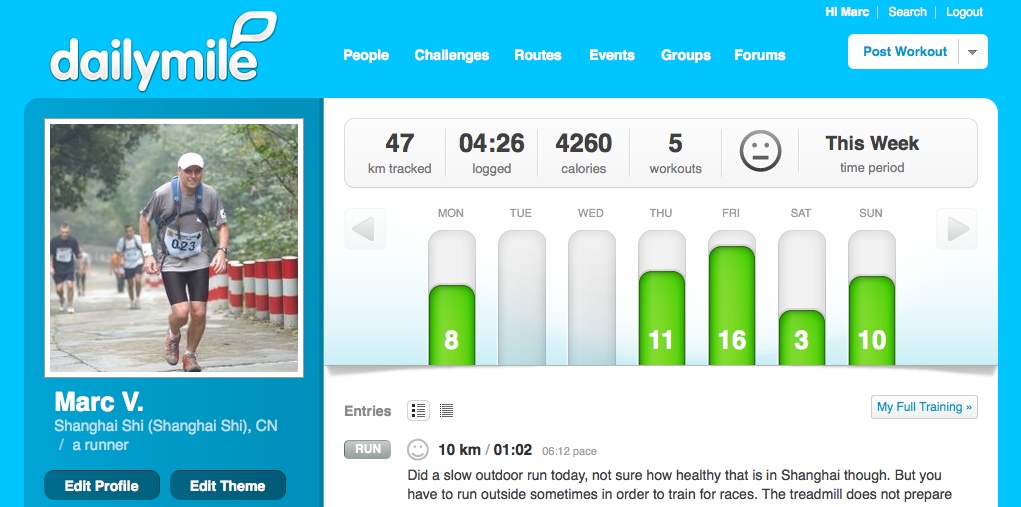
s during the week were drinking lots of good wine (my dad has a nice wine cellar) and eating excellent food. In order to compensate for the additional calories I regularly went for runs with my dad, and after 2 weeks I am in a much better shape than before we left China. I hope to keep up the shape and even improve it over the next weeks. As usual I also bought quite some clothes. Interesting is that most Dutch people visiting China buy their clothes here (especially on the fake markets), but over the years I have become the opposite and buy almost all my clothes in Holland. The quality is normally a lot better and I don’t feel very comfortable in fake clothes, even if they are no different from the original. 


All in all a very nice and relaxed 2 weeks. Different from the tropical island or Tuscany road trip vacations we used to have before our kids were born, but just as enjoyable. Now that I am back in China I realize that I am much more relaxed than before and I approach problems in a much easier way. I guess a vacation every now and then is important to recharge one’s batteries, and mine are certainly much fuller than they were 2 weeks ago.

A company bought AdWords on my name


This week I was checking Google for what the Dutch media had written about the opening of the Academic Year in Maastricht, when I noticed that someone had bought AdWords for my name on Google.nl (the Dutch version of Google, so not on Google.com).

The advertiser is the website of Dutch business magazine Quote, more a gossip glossy than a real business magazine, but (or maybe because of that) quite popular. I was featured twice in the magazine in a listing of successful entrepreneurs, and they seem to have bought the names of other people that were featured in their listings as well. At least, I checked it for Spil Games co-founder Bennie Eeftink, and search results for his name have a similar sponsored link.

Not sure what to think of this, but it probably works for Quote: a friend told me they have been advertising with my name for a couple of months already.

Can kids learn a language in one week?


In China I try to speak Dutch to Scott, but he normally does not really understand what I say, except for some frequently used sentences (where are your shoes, you’ve got to go to sleep etc.). The problem is probably that I am the only one talking in Dutch to him at home, and when I talk to my wife or the staff at home I always speak English or Chinese. So often I end up talking to Scott in Chinese as well, to make sure he understands what I mean. Not good of course, because you should stay with one language while talking to your kids.

Exactly one week ago today we flew from China to The Netherlands. Since then Scott has mainly heard Dutch, because my parents and I speak Dutch to him. When my wife and I went to Maastricht last weekend, Scott stayed with my parents. At first we were wondering whether my parents would be able to communicate with him, but it turned out we didn’t need to worry. Scott understood a lot of what they were saying and picked up words very quickly.

Now that we are almost one week in Holland I realize I only speak Dutch with Scott and he perfectly understands me. One week ago he probably would have looked at me showing that he does not comprehend what I am trying to tell him, and now he even replies to my Dutch questions (in Chinese or by nodding, not in Dutch yet). I think it shows kids can pick up a language in a one week. Of course not the complete language, but the main words he needs to understand, and the structure of sentences. I am truly amazed by this, I wish I would still have this ability!

His own talking is still mainly in Chinese, his favorite words right now are qiche (Chinese for car) and mei you (don’t have, finished), and he starts to make sentences such as dao qiche boom (when he rides his tricycle backwards and he hits the wall, with boom being the sound of hitting something). But if he is looking for something and finds it, he now says “Daar!”, which is Dutch for “There!”. The only English word he regularly uses is “no”. As usual for toddlers his age (20 months) that’s quickly becoming a favorite word. But he also starts to use the Chinese variety of no, especially bu yao (Chinese does not have one word for no, it depends on the verb you use).

I like to observe his language abilities and I wish I had learned several languages as a toddler already. I look forward to seeing his (and soon also Elaine’s) progress over the next couple of months.

Maastricht University Opening Academic Year 2009-2010

Yesterday I was invited to deliver the keynote speech at the opening of the Academic Year at Maastricht University. I was very honored to speak at my alma mater, exactly 18 years after I started my studies at Maastricht University.

It was a very busy but also a very interesting day. It started early in the morning already with a breakfast with Andre Postema, vice-president of the executive board (College van Bestuur) of Maastricht University. We had a nice talk about the university and its strategy, about the city of Maastricht and of course I told him about what I have done so far. Afterward, we walked to the Minderbroedersberg, where I would speak in the aula at a symposium about New Leadership. Before the presentations started, I finally met several of the staff of the university that I had been communicating with over the past months, for the first time in person. I also did another interview, which was finished right before we started.

The symposium had some high level guests: among others a delegate from the Chinese embassy had come to Maastricht to listen, Prof. Jo Ritzen (Maastricht University’s president) was there, and even the Bishop of Maastricht was sitting on the first row. Prof. Will Foppen opened the symposium, followed by a presentation about leadership and leadership styles in the academic world by Prof. Marja van Dieijen-Visser. I did the last presentation on leadership in the business world, where I focused on what I see as important traits for a new leader and on new leadership styles.


In preparation for the symposium I had proposed a statement that students should react to in a written essay, and the 3 best students were invited to defend their statements in a presentation. After the discussion with the students and the audience Laura Gutierrez Gomez was voted by the audience as the winner, and she won a luxurious lunch at top restaurant Beluga. The number 2 Lianne van Exel won a balloon trip and number 3 Andrea Proto received a wellness package at Thermae 2000 spa.

Then it was time for a nice lunch in the sun at the patio inside the Minderbroedersberg building. When the lunch was over I went for a quick walk around town, visiting among others the economic faculty where I graduated with a Masters degree in 1995. After that I walked over to the “Theater aan het Vrijthof” together with Prof. Jo Ritzen and Jeanine Gregersen (the spokesperson of the Executive Board) for the rehearsal of the opening of the Academic Year. This went fine, and after doing an interview with ScienceGuide (see here) it was time to be seated. After all the guests were on their seats the cortege entered, with all the professors dressed in their traditional robes and hats (to get an impression of yesterday’s cortege, see this short film here). I like this kind of rituals, it makes the academic world special.

Prof. Jo Ritzen started the session with a speech about innovation and leadership. Among others he mentioned what he thinks are the most important characteristics that a university graduate should possess. Not only expert subject knowledge, being able to work in teams and solve problems, but also having a strong moral backbone. Moral consciousness is unconditionally linked to knowledge and skills. A good point, especially when looking at some of the causes of the global economic crisis.

After a short musical intermezzo I was introduced to give the keynote speech. The title of my speech was Entrepreneurship and Internet Innovation: Lessons and Experiences. In my keynote I reflected on my time studying in Maastricht and the choices I made in life because of this. I also talked about social media and how business leaders should embrace it. If you want to read the complete speech you can find it here (pdf).


After another musical intermezzo Prof. Gerard Mols, rector magnificus of Maastricht University, performed the award ceremony for the Maastricht University Student Award and for the Edmond Hustinx scholarship. Prof. Jo Ritzen then did the closing words before Ode an der Freude was being played and the cortege left the building.

Following the ceremony there were drinks, but I first had to do another video interview. When that was finished I had a few glasses of beer and wine with several friends and classmates, and some of my former professors. It was nice to see marketing professor Hans Kasper again, he was actually the professor who gave me my very first lecture in university. I got to know him quite well over the years in Maastricht, especially during the academic year that I was president of the Maastricht Marketing Association.

After the drinks my wife and I had a dinner with the executive and supervisory board, the deans of the university and the commissioner of the Queen. During the dinner prof. Jo Ritzen gave me a very nice modern painting of the famous Vrijthof square. I plan to hang it in my office, so I will be reminded every day of the great day I had in the beautiful city of Maastricht!

Scott's first day of school

Today Scott has his first day at school. There is a small private kindergarten located in our compound, and now Scott is old enough to join the classes. In total there are 11 kids (all toddlers), with 2 teachers and 2 ayi’s.

Scott was very happy to go to school, although it was a bit of a disappointment for him that he had to walk instead of going by school bus. Every day all the school buses pick up the kids for the international schools at our compound and he always likes to watch them. Although Scott was excited at first, when he arrived at the kindergarten he suddenly got second thoughts and he did not want to go in. So I held him on my shoulder for a while so he could look around from a safe position. Each time I wanted to put him down he started crying and did not want to let go.

Eventually I sat down with him in the back of the class room when he suddenly started smiling and walked up to the other kids. He was still a bit reluctant to play with them but he was not afraid anymore. He quickly found his own play castle and observed the others from there. Just before my wife and I left he started interacting more with two other kids and he did not even realize that we left the class room. I hope he will have a good day today, it feels very strange to leave your little boy to other people and not knowing what he is doing.

I noted that out of 11 kids only 4 showed up today. The reason is that most flew back to China over the weekend from all over the world and they all are still jet lagged. Some others are still outside China on vacation and won’t start until next week. Probably not bad for Scott, he won’t be as overwhelmed with just 4 kids and 4 staff. I look forward to seeing him tonight, too bad he can’t tell us all his stories yet.

It looks like we'll need a new lawn

This summer it rained a lot more than usual in Shanghai, and it also rained a lot harder. Over the past week it poured every day at least 1-2 hours and these were usually heavy rainstorms, flooding the streets in downtown Shanghai. Every single day our garden now turns into a (very shallow) swimming pool after it rains.

This morning I sat in the garden (if it doesn’t rain it’s often sunny a few hours a day) and noticed that half the grass had already died because of the water. I think we will need to order a new lawn when the monsoon will finally be over. That’s the good thing about Shanghai, you don’t need to grow your own grass but you just call a company. The next day a truck loaded with grass tiles comes over and within two hours all your old grass is gone and replaced by a fresh new lawn.

This is what our garden looked like last year after we changed the grass right after moving in: picture. Within days you don’t see that the grass consisted of separate tiles anymore, and it looks like a normal lawn.

The man who owns the news

During a trip to Indonesia a few months ago I was browsing the bookstore on Jakarta airport before departure, when I saw the book “The Man Who Owns The News: Inside The Secret World of Rupert Murdoch” by Vanity Fair journalist Michael Wolff. Murdoch and the News Corp conglomerate that he built over the past decades fascinate me for quite some time already, so I decided to buy the book. That was a good decision, I enjoyed reading it and learned a lot. If you’re interested in media and how the media works, this is probably a good read for you. But the flaws of the book will likely make the book less enjoyable for most readers.

For one thing, the book is too long. I don’t mind long books, but sometimes a writer should come to the point more quickly. The core of the book is the batlle to take over the Wall Street Journal. Certainly an interesting episode in Murdoch’s career but because Wolff spends about half the book writing about Murdoch’s obsession with the WSJ and all the details of the negotiations of the take-over, it gets boring at a certain point. Even worse, because of this other things that happened during the same time are only touched upon. For example the whole MySpace episode should have taken a much bigger part in the book in my opinion. The same for Murdoch’s ventures in China, they are mainly mentioned as background to describe the role of his latest wife, Wendi Deng. Of course I am biased working in the Internet industry in China, but I think Wolff focuses too much on traditional media in the US (and the UK & Australia) instead of new media and instead of up-and-coming countries like China. Some more things are missing. The book mentions that Rupert Murdoch was almost bankrupt in the early 1990’s, but does not describe what exactly happened, nor what tricks he needed to pull of in order to survive. I think that’s actually a very important part in the history of News Corp, and it deserves a much more detailed place in this book.

But apart from these points the book paints a vivid picture of who Rupert Murdoch really is. Michael Wolff had full access too both Murdoch and all of his family members, including his old mother who is still living in Australia. Murdoch does not come over as a very likeable person. He does not even want to be likeable, not to his staff and not even to his family. He is described as a merciless predator, not somebody who you would like to do business with. But despite these character traits (or maybe because of them) he became the biggest media mogul on this planet. The book does not really make clear how he did this. It describes a lot of the deals, but once a deal is done it moves on to the next one. I wonder how Murdoch was able to manage them all and to make sure that they would not work against each other. That’s what I would have liked to read more about. I still don’t understand why his business is so successful. Is he so good? Was he lucky? I think it’s a combination of both. He took enormous risks at the right moment (especially in the 1980’s) to grow his businesses, and that eventually paid off. That together with his excellent dealmaking skills and the ability to motivate his staff to do everything for him. Don’t underestimate the last part, I think most of the people working for him fear him, but still everybody wants to please him.

If you like some juicy gossip about his family and especially his relationship with his Chinese wife Wendi Deng (who is almost 40 years his junior), you will also enjoy this book. Michael Wolff seems to enjoy to dig into his private life and does a good job explaining all his family relationships. Having access to all his kids certainly helped him, especially to the ones that felt that they were not treated very well by their father. Rupert Murdoch is a ruthless business person and because he cannot distinguish between private and business life he uses the same business approach to managing his family. I hope my kids will see me in a different light when they grow up!

After reading the book I still admire Rupert Murdoch for what he achieved. But I see him differently than I did before I read this book. He lives for his business and I don’t think he can ever say goodbye to it. He just does not have another life, everything is business. I don’t think I came across any real friends in the book for example. I also wonder what will become of News Corp if Murdoch will ever pass away (something that’s also touched upon in the book). That may still be years from now (his 99-year old mother is still alive and doing well), but I wonder if there is really somebody who can hold the ship together. I will keep on following News Corp much more closely from now on, it’s a fascinating company with an even more fascinating CEO.

Advertising while surfing over 3G


Since I got my 3G USB connector last week I am using it every day while driving to and from work. So far the experience has been great, but there is one small annoyance: China Telecom sometimes serves up ads for its 3G service while you’re surfing. Not sure what triggers it and I certainly don’t see what the use is. I am already using 3G so why bother to tell me I should use it? It happened to me twice so far when I click a link, the page then redirects to another one owned by Shanghai Telecom. When I go back and click the link again the ad does not reappear and the requested page loads. Very strange, I cannot explain why this happens.

Shanghai Daily names person who requests anonymity…


Does the Shanghai Daily not have an editor that reads articles before they are printed? Today’s paper has a story on page 3 about Shanghai tourists that were killed in a landslide while trying to cross the Luxi Gorge in Zhejiang. At the end of the article one of the victims, Zhang Lin, is described. The article continues:

“I know he loves traveling, but we never imagined anything like this happening,” said his father, who requested anonymity. (emphasis added)

What can I say, you must be a pretty dumb editor to write this or to let this slip through the proofreading process!