Media coverage

The media coverage of Tudou is increasing in Europe. Not many people know the website there yet (and because we only have a Chinese version, most will likely never here about us), but the traditional media are starting to publish more about the site.

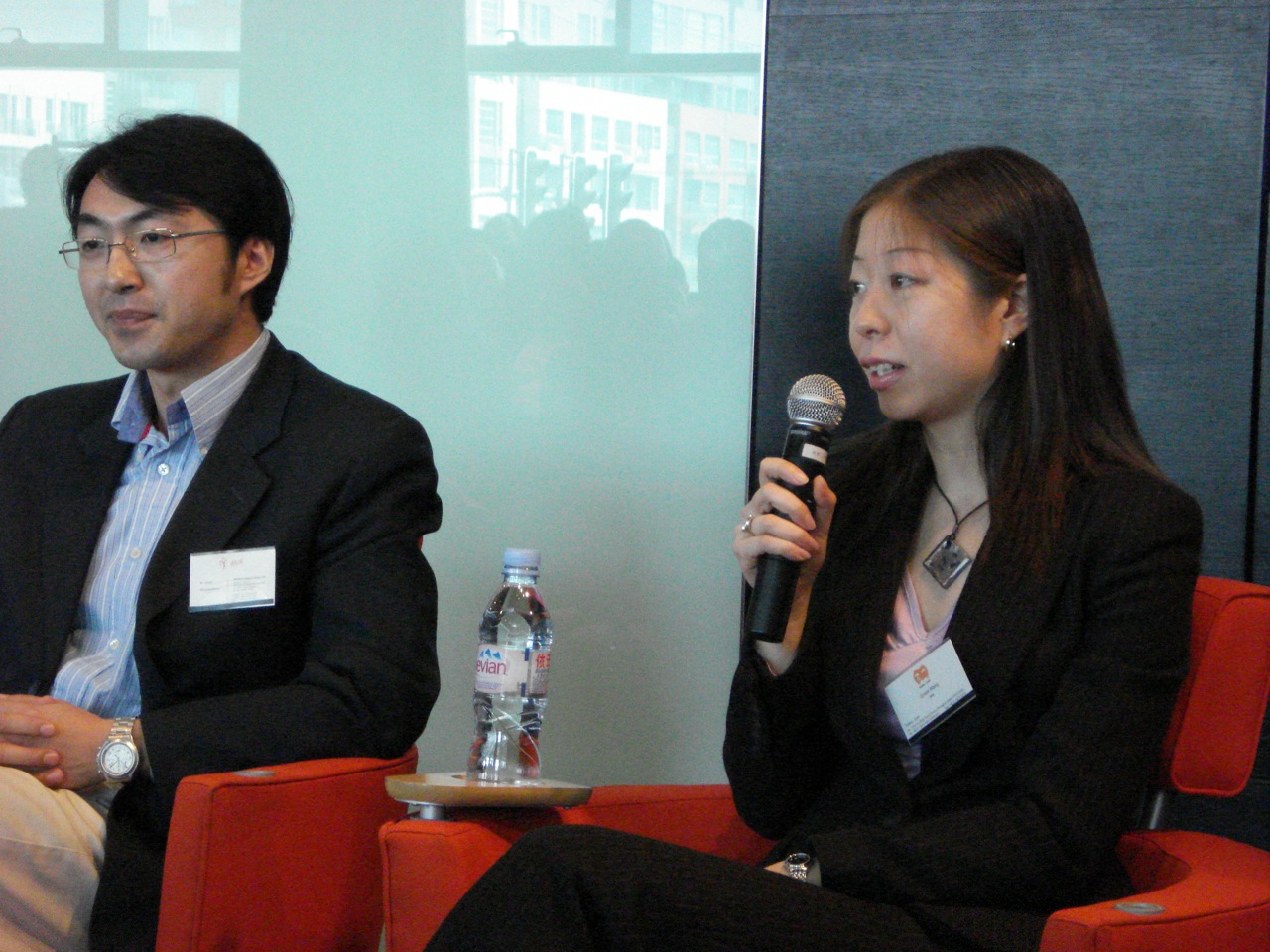
There was an article about Tudou in the Dutch magazine FEM Business about 3 weeks ago, and this week an interview with Gary and me was published in the Dutch Elsevier Magazine. Today a TV crew making programs for German stations ZDF and Deutsche Welle did interviews at the Tudou office, and this afternoon I was interviewed for Radio Eins Berlin-Brandenburg (my first live interview in German). In the next George magazine (the Dutch version) there will also be an article about Tudou.

Interesting is that my wife is also starting to appear more in the media now. For next month’s edition of CFO China she was interviewed for example, and this month she appeared in the fashion magazine Jessica.

Flu?

Last night I got back from a week-long trip to among others Chengdu and Hangzhou. A nice trip with lots of interesting meetings, and also a bit of free time to do some sightseeing. Yesterday I suddenly did not feel too well. I was cold, my muscles were hurting and I felt very tired. The typical signs of a starting flu. But work goes on, so after a 10-hour deep sleep I managed to go to work with the help of some painkillers. I felt pretty well the whole day actually, probably because I was too busy to realize that I was not feeling well. But when I left the office around 9 PM I felt dizzy, so I’d better get a good sleep again tonight. No time for being sick this week 🙁

Chengdu trip

Not many posts over the last days, because I am in Chengdu at the moment with some business associates. I had not been to Chengdu in about 4 years, when I produced a short film about the city. At that time I already loved the city, and coming back here after all these years was not a disappointment. The city not only looks great (lots of green and a bit warmer than Shanghai), but it also feels great. It is booming, even more than Shanghai I feel.

We looked at several companies over the past days, and also talked to a few government agencies. From these talks I have the feeling that Chengdu could be the next big thing in China for investors. Not as expensive yet as eastern China (salaries for engineers are at least 40% lower than on the east coast), and with an excellent educated workforce.

Yesterday I learned that there are currently 430,000 people studying in Chengdu’s universities. 430,000 students… If you think about that figure it almost seems unreal. Many of them do not want to leave the city after graduation, because of the good environment. This means that finding good people here is a whole lot easier than in Shanghai – and a lot cheaper as well.

It is very well possible that I will spend some more time in Chengdu in the near future. I sense there are some big opportunities, and I don’t want to miss out on them.

34000 free cups of Starbucks coffee

On Friday Starbucks had its first Chinese Coffee Break, a two-hour event in which you could get a free tall cup of coffee. I had a lunch appointment at 12 and decided to drop by Starbucks a few minutes before noon to check how busy it was. I actually did not expect to see many people, but while walking to the Grand Gateway shopping center I knew I would be wrong: I met at least 20 people with a paper cup from Starbucks (normall I never see anybody with a Starbucks cup on my walk from the office to Grand Gateway). Upon arrival at the coffee shop there was a line of at more than 50 people waiting for their free cuppa! This was a few minutes before 12, just before the official Coffee Break would be over. I did not wait to see what would happen at 12, likely they would still serve all the people (it’s a US chain, not a Chinese one), and I certainly did not stand in line to wait for a free coffee. I did get a coffee there about an hour later, when I was just about the only customer.

It made me think, why would somebody wait in line for at least 20 minutes to get a cup of coffee for free? Of course I know the answer, most were people who had never been to Starbucks before and wanted to try the expensive coffee. Or office workers who could afford it occasionally, and now jumped to get it for free. For most Chinese time is still less valuable than money. It’s the same as on the internet: Americans have money but no time, Chinese have time but no money. Therefore I think that online ads (especially video ads and in-game advertising) are going to be huge in China: people are willing to watch them in order to see a video or watch a game for free. Don’t try to charge them for it, because nobody will pay you.

The Shanghai Daily also wrote an article about the Coffee Break, and they reported that a total of 34,000 free cups of coffee had been handed out. In Beijing the total figure was only half of this, sort of proving that Shanghainese are more thrifty than Beijingnese. All over Greater China (incl. HK and Taiwan) Starbucks handed out 186,000 free coffees. The newspaper also interviewed some of the customers waiting in line. One of them, a female headhunter working in Plaza 66, was calling her colleagues to tell them about the free coffee. For another one, a 50-year old female retired worker (they still retire early here), this was her first Starbucks coffee in her life, as the coffee would be too expensive for her to buy.

This marketing action was certainly worth its money. The total cost for 186,000 coffees is likely less than USD 100,000. For that price you have over 150,000 people coming to your store, wait there for quite some time (so they can get used to the Starbucks atmosphere) and have a good time talking to their friends (nobody comes alone in China). Likely they talk about it with their friends at home and in the office, and because it was for free probably in a positive way. Combine that with lots of free press attention and a good coverage in the blogosphere, and I think the USD 100K was well worth it. A smart move, congratulations to the Starbucks marketeer who came up with the idea.

Mining and online video – a great combination?

ChinaTechWatch has a great column today, about a Chinese mining company Admax resources, that just changed its name to China YouTV (CYTV.OB). The firm is currently involved in mining, but wants to expand into online video, a completely unrelated line of business.

This is so typical of Chinese companies, if one thing does not work they just try someting completely different. They probably heard that YouTube is a big success in the US. Well, they likely reasoned, then we should do that here too of course. Not hindered by any knowledge about internet, video or the competition they start pooring money into a venture that will surely fail. It’s a pity for their investors, and it explains why I only invest in Chinese companies where I know the management personally.

An interesting passage from the press release explaining their strategy:

“If the Company finds mineralized material and it is economically feasible to remove the mineralized material, it will attempt to raise additional money through a subsequent private placement, public offering or through loans.

If the Company needs additional cash and can’t raise it, it will either have to suspend activities until it is able to raise the cash, or cease activities entirely.

If the Company can’t find any mineralized material or it is not economically feasible to remove the mineralized material, it will have to cease activities and focus on the new market: the video sharing industry in China.”

This is not a joke, but a serious press release…

In case you are an investor in this mining/video company sell your shares, or otherwise make sure the CEO will be fired on the spot. And I hope potential investors will Google this company and find this blog post. Investor beware!

Labor scams

Today is World’s Consumer Rights Day, and because of that the Shanghai Labor and Social Security published a list of the top-10 most common employment scams. Some could have happened in Europe as well, such as that the job is very different from the job description that was advertised. But others you would not often encounter there, a few examples:

– If you want to get a job at a certain company, you first need to do a paid training course. The company, or at least the recruiter, earns money from this.

– You have to submit a sample of your design work when applying for a job. These works are often used commercially, even if the applicant was not offered a job.

– When applying for a sales job, you have to buy the products that you need to sell. I remember a story where it turned out that the price is much higher than the real market price, and the sales jobs were actually fake.

– Everybody is fired right after the probation period, because workers in China earn less during the first months on the job. Of course you can get re-hired, but only at the lower probation period salary.

The main problem is that there are too many people looking for jobs in this city, and therefore there is a lot of competition to get a job. Each year there is a huge amount of university graduates that cannot find jobs and there is a steady flow of migrant workers arriving in the city. Often these groups are quite naive. Migrant workers because they are new in a big city, and students because they have not encountered the problems of real life yet. Unscrupulous entrepreneurs know that these groups easily fall for these traps, and use it to earn money.

Job opportunity: business development manager at Spill Group Asia

Shanghai-based online gaming company Spill Group Asia is looking for a business development manager. Responsibilities for this position include:
– website promotion, negotiating and executing cooperation agreements (both in China and other Asian countries)
– website data analysis (using tools such as Google Analytics) for our gaming sites in Asia
– research on internet trends in China, India, Indonesia and Malaysia
– defining strategies to grow the market share of Spill Group Asia’s casual gaming websites

The ideal candidate would have the following qualifications:
– Chinese national with fluent English, both oral and written (essential, please do not apply if your English is not fluent)
– University degree with computer science, technology or marketing major
– Good communication skills, both with Chinese and foreigners
– Willing and able to take responsibility
– Being able to work independently
– Several years of experience in advertising or internet industry
– Enjoys playing online games, although he/she should not be addicted 🙂

We offer a very competitive package to the right candidate. If you are interested please send your resume and cover letter with salary expectations (in English) to hr@spillgroupasia.com.

Living on an island in a big city…

What happens if your house is in the middle of a redevelopment zone? In China that normally means that you have bad luck. You might get some form of compensation, but you need to move out before the bulldozers come. No way around it it seems, at least most of the time. A family in Chongqing (rumoured to have good government connections) refused to accept compensation and move. The picture shows what happened: they now live on a 12 meter high cliff in one of the most densely populated cities in China!

(picture from Metro.co.uk, through Shanghaiist)

Update: It turns out that my media sources were wrong, the China Herald reports that the house is not owned by protesters, but by the construction company. It is used as the constructor’s temporary residence.

Free Starbucks Coffee

This Thursday Starbucks will be organizing its second annual Coffee Break event. This means that from 10 AM to 12 noon you will get a free tall coffee at all Starbucks Coffee outlets in China. I have at least 3 Starbucks Coffee outlets within a 10 minute walk from my office, so I might drop by to see how many people are willing to wait in line to get a free coffee.

The event will not be limited to China, but also takes place in the U.S., Canada, New Zealand, Australia, Thailand, Malaysia, the Philippines and Indonesia. Last year China was not included in this list yet. During the Coffee Break session you can ask questions about Starbucks coffee or its coffee brewing process. During last year’s event many stores gave away samples of their food as well.

I think this is a smart idea. I expect lots of people to blog about it, which means free publicity. Also I think that a lot of Chinese have not tried Starbucks coffee yet, and this may be a good opportunity to lure them into the stores.

The Shanghai Daily also reports about the event, but it seems the editors did not check the Starbucks website, because they report that the event will take place on Friday. So it may also be fun to stand outside Starbucks outlets in Shanghai on Friday morning and see angry customers who do not get their expected free coffee. Or did I miss another press release saying that this event will be organized one day later in China?