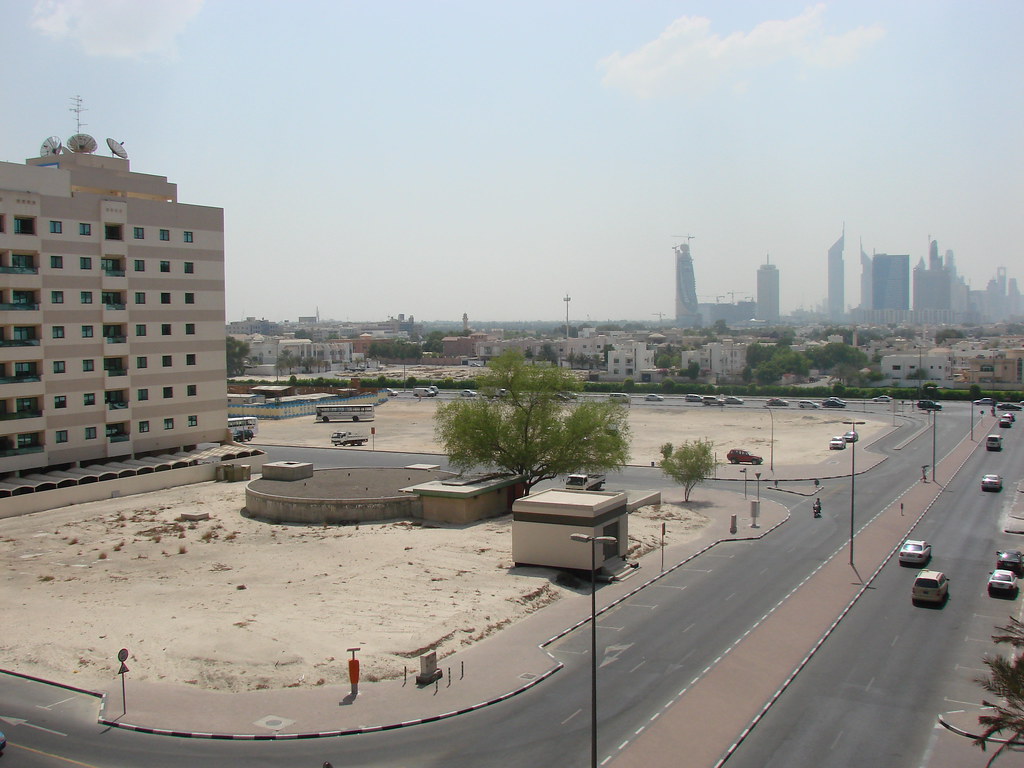
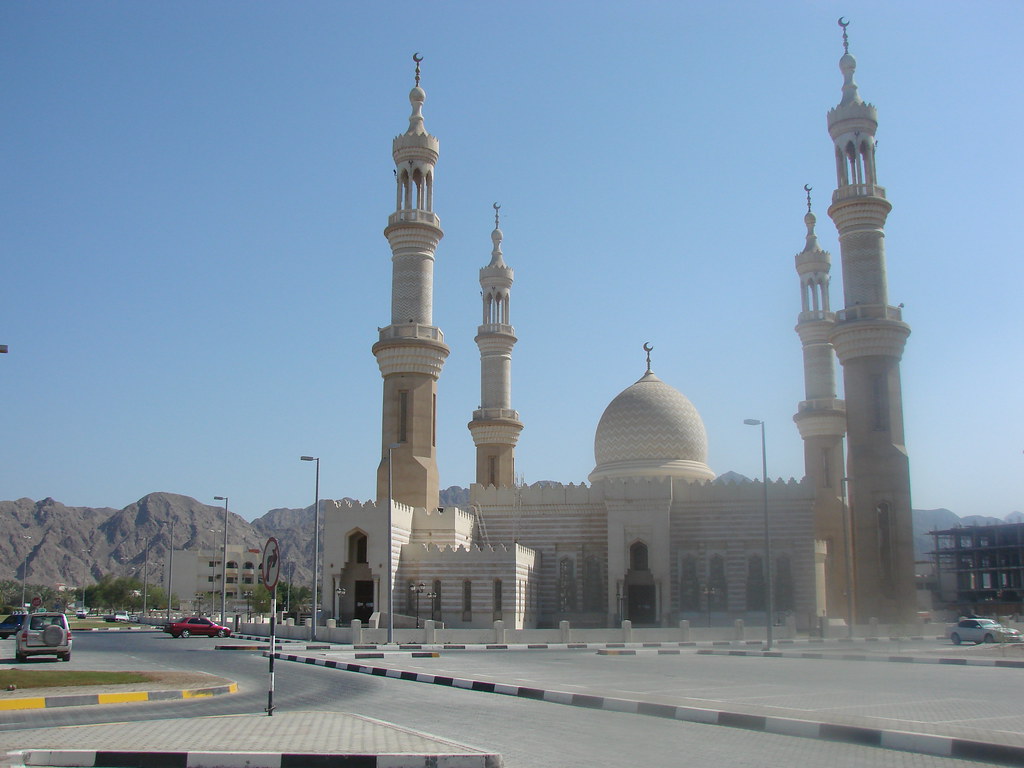
 Yesterday we decided to make a 4WD trip through the mountains and the desert. A friend of mine, Martin, who works for Shell in Dubai likes to take his SUV for a spin in the sand, and he offered to show us the real Emirates. And he did a great job, we spent almost 6 hours off-road in one of the most desolate environments I have ever been in. We started in the direction of Sharjah, where you could quickly sense that people are a lot more conservative than in Dubai. No women on the street anymore (also not in burkha’s) and with mosques dominating the skyline instead of high rises. Because it is Ramadan we were not allowed to eat or drink with other people being able to see us, so we had to watch out a bit with drinking the bottles of water that we brought. Strangely, at a gas station we were able to get coffee from a machine, although we were not supposed to drink it there.
 After about an hour of following the seashore, we took a small road that led us into the mountains. The road was paved, so it was a nice drive. Suddenly, however, there was a security checkpoint and we had to show our passports. The UAE soldier took those with him into a small guard house, and studied them for about 5 minutes. Because my wife has a Chinese passport we had no idea if he would let us through, and the minutes lasted quite long. But when he came back it turned out that he was not able to read any non-Arabic, because he asked Martin and me where we where from. We told them from Holland, and I immediately followed by saying that the third person is my wife. That seemed OK for him, and he opened the gate to let us through.
Then we really entered mountainous territory, and the road became a mixture of sand and stones. We followed a wadi (dry riverbed) into the mountain, and the views were stunning. About 30 minutes later, in the middle of nowhere, another UAE checkpoint. At least, that’s what we thought. But no, it turned out that this was the border of Oman. We had not planned to go to Oman, but apparently part of this remote region was not UAE anymore. Of course this was no good news, because Chinese need to apply a visa for Oman. So we pretended to have no idea where we were and showed the map and a location in the UAE that we wanted to reach. The soldier told us we had to follow this road and would eventually get there. But he would first like to see our passports. We did the same trick again, we gave him the 3 documents and told him that we are from Holland and that the person sitting in the back is my wife. That seemed reasonable enough for him, and with a friendly “ramadan rakeem” he let us through! So now we were in Oman without visa’s…
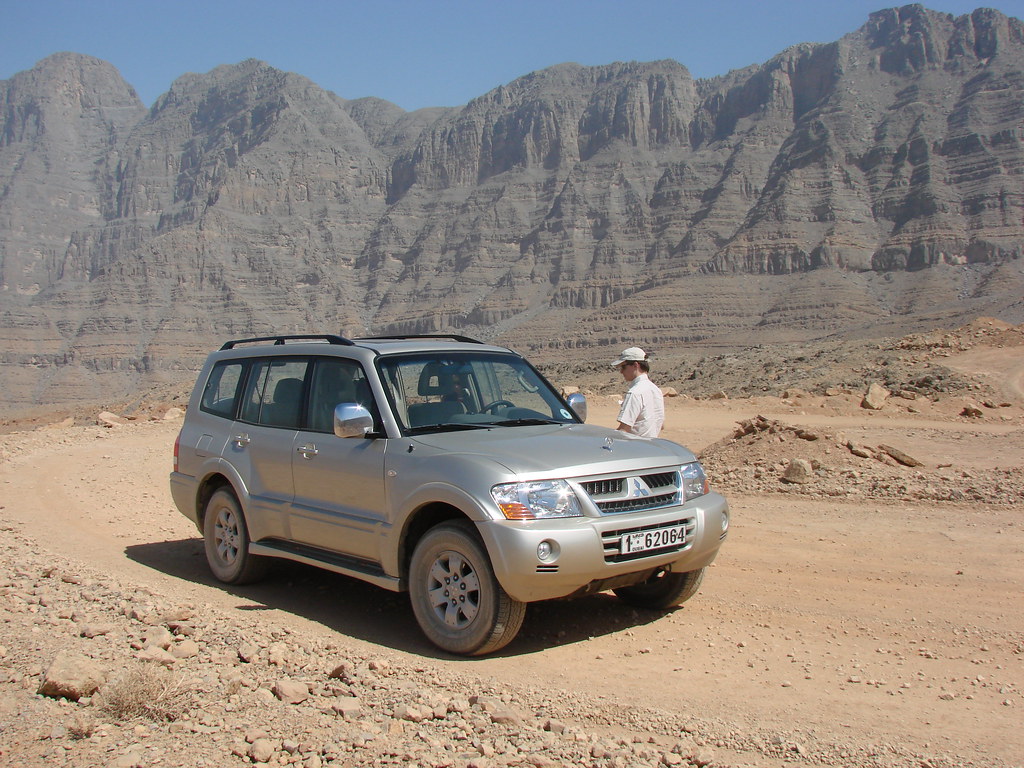 According to Martin there would be no border control at the other side of the mountain (where the UAE would start again), and I hoped he would be right. But if not we would just go back the same way. They would very likely remember us and hopefully let us go back. Luckily Martin was right, and we did not encounter any further check point problems. The road was pretty good (all stones) and it seemed like driving on the moon. All surrounding mountains were brown, and there was not a tree or plant in sight. A completely uninhabitable environment – and indeed, nobody seems to live here.
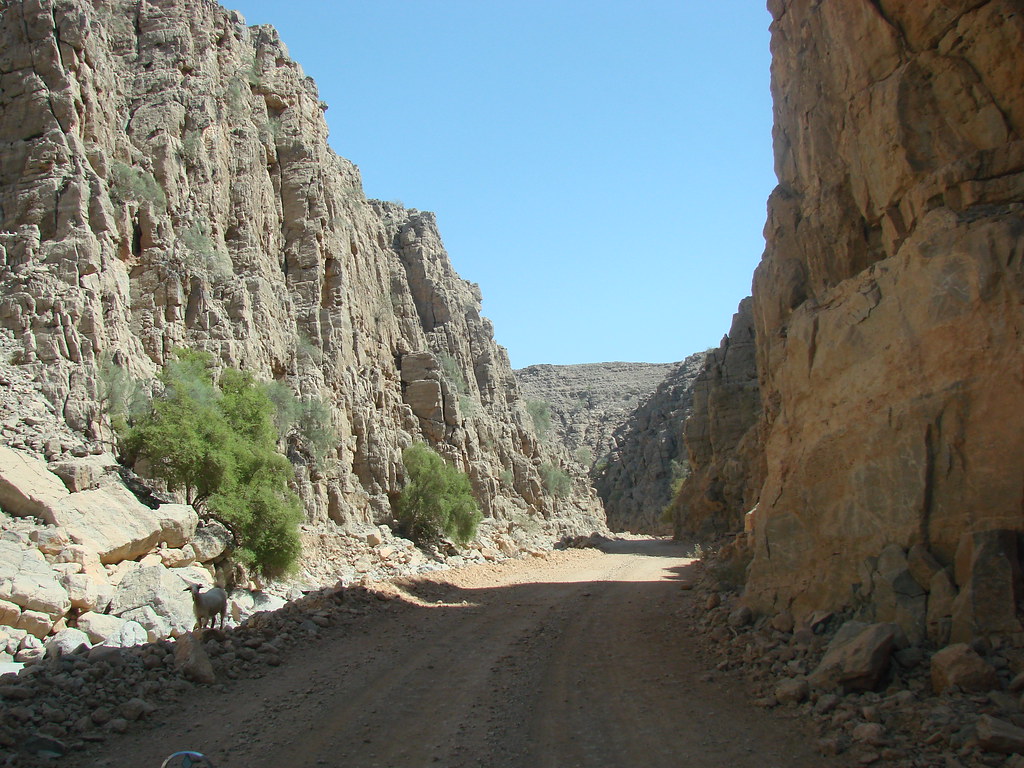 We passed the top of the mountain (1100 meters high) and went down on the other side. Here the nature was much greener, and we also saw a few scattered houses. Halfway down the mountain we saw a man standing at the side of the road, waving at us to stop. We did so, and he gestured to us that he wanted to go to a place at the end of the road. Desert hospitality does not allow you to say no to a hitchhiker, so we took him in. He did not speak any English however, and we no Arabic, so it was a bit weird. We had to put our food and drinks away of course, and wife felt a bit uncomfortable to sit next to a local who we could not communicate with. We had no idea who he was, but eventually figured out he was from Pakistan. What was he doing here in the middle of nowhere? We had no clue, but later formed the theory he might be trying to cross illegally from Oman to Dubai with our help. So there we were, without visa’s for Oman and with a Chinese and a Pakistani on board. We really hoped we would not meet any police or other checkpoints! But at the first town out of the mountains we told the person we would go in a different direction and let him out.
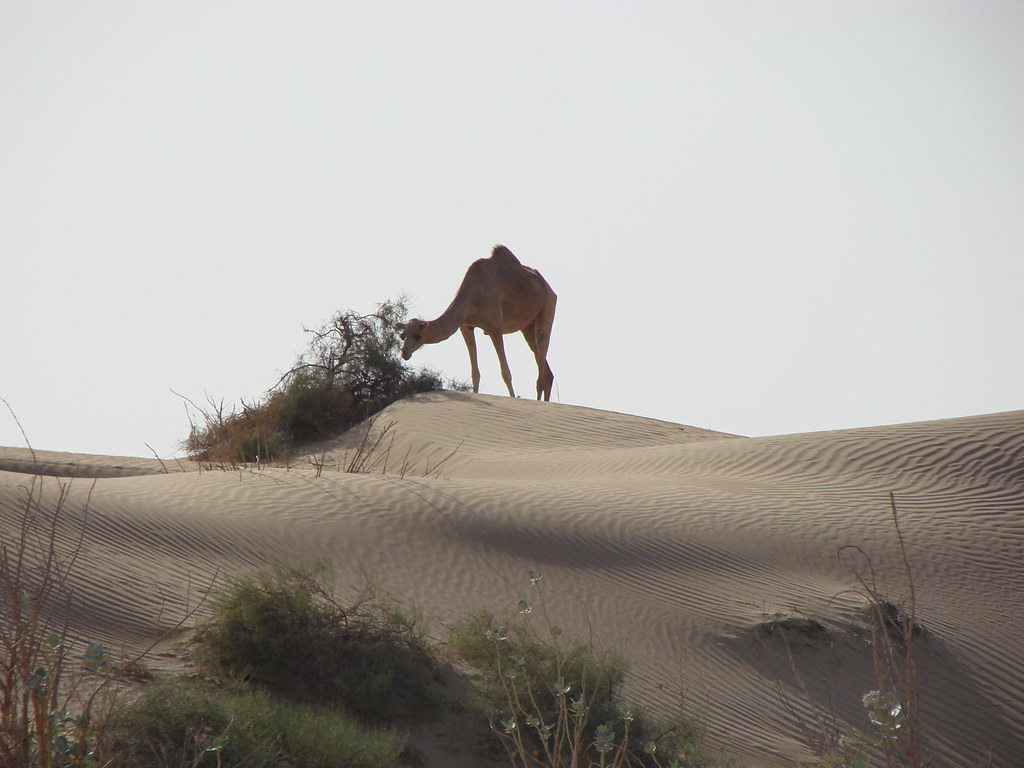
We drove to the beach to have a drink (nobody around) and then took a different road back to Dubai. This time through the sand desert. This was a great experience: no roads anymore, and only sand in all directions as far as the eye could see. Without a GPS this would be dangerous undertaking, but of course Martin was well equipped. We drove around without getting stuck in the sand (always a danger) and even met several groups of camels. It was late afternoon, and therefore not so very hot anymore. The warm desert wind was actually quite enjoyable when we made short stop to refuel ourselves. We found a nice camping site, but did not bring a tent, so decided not to stay overnight. Martin marked it in his GPS though for future trips.
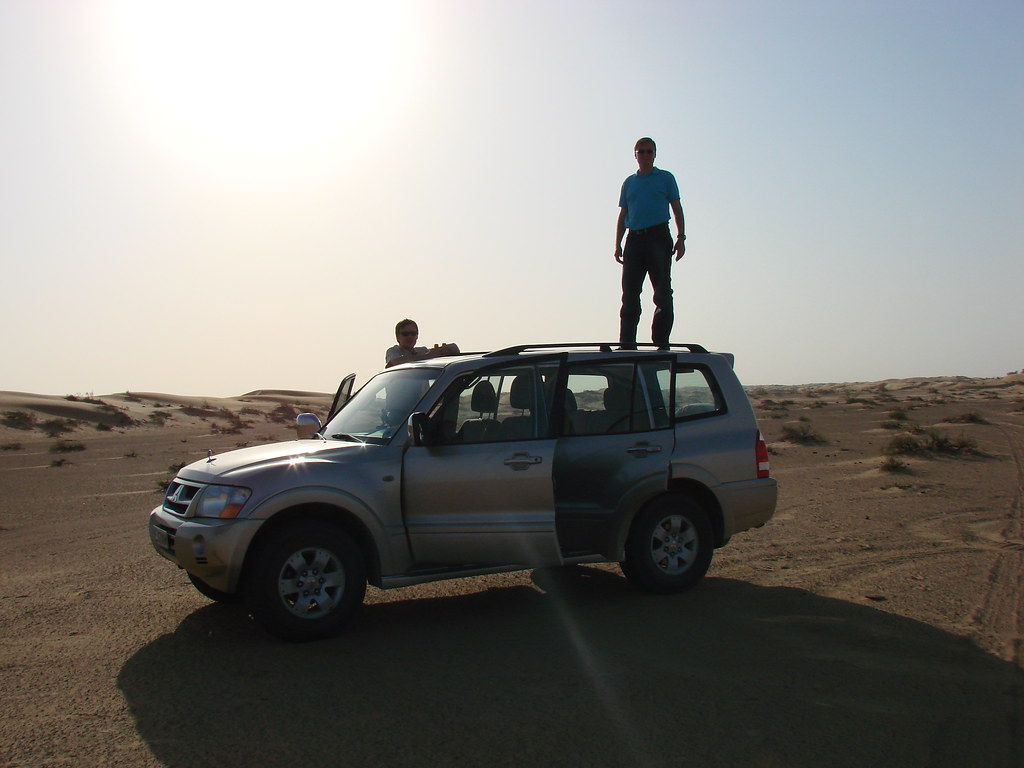 Just before Iftar (sunset, when you are allowed to eat again) we got back to Dubai. In the last 15 minutes before arriving at his home we saw a total of 4 accidents. Martin explained us this is normal. Not only do most people here drive like maniacs (although in daily life they are extremely friendly), but they also did not eat and drink for over 12 hours, and all want to be with their family the moment Iftar starts. Many multinationals even tell their expats not to drive between 5 and 6 PM during Ramadan. But we also survived this last danger, and decided to have an Iftar meal ourselves at one of the cities top hotels. Only hotels are allowed to server alcohol, and we were dying for a cold beer! Looking back over a few drinks we all felt it was an exciting day with memories that will last a long time.
(All pictures of the trip can be found here)

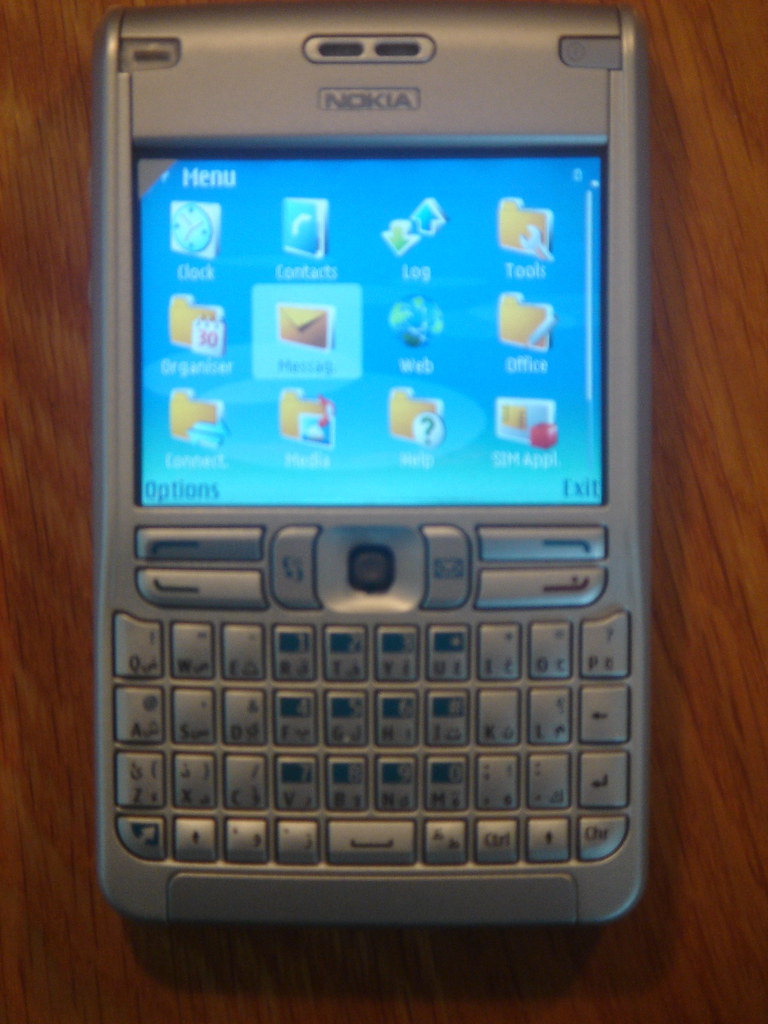 In Dubai I bought a new phone, Nokia’s E61 business phone. I liked the design and the functions, and have been using the device for a week now. The phone features among others quad-band, a full HTML browser, 3G, Wifi, and it has a normal keyboard. Exactly the phone I have been looking for for years. My “old” phone (the Dopod 818 pro), was also not bad, but Nokia beats it on functionality and the stability of its operating system. And finally I have a phone with Blackberry functionality (it’s now available in China – but only for corporate customers), so I can work 24/7 wherever I am!