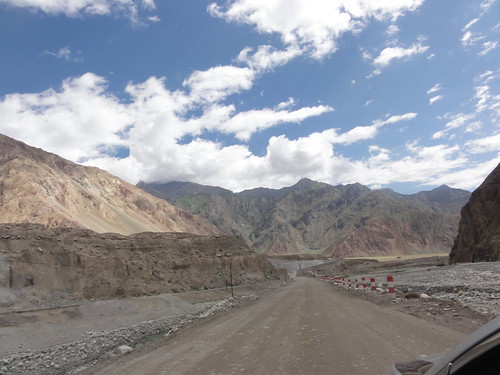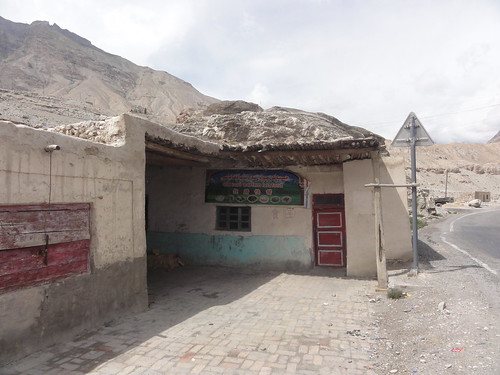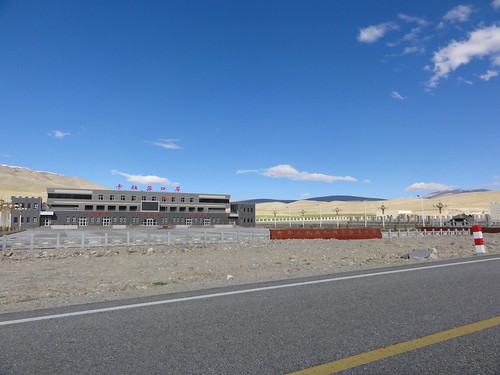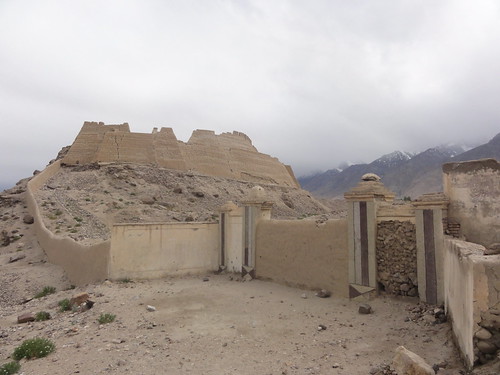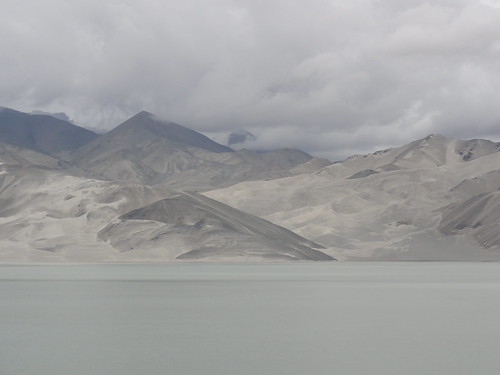
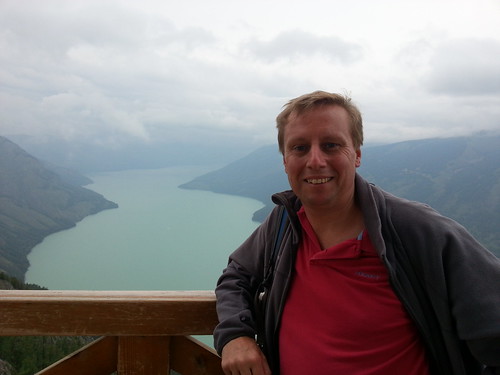
After a few days in Kashgar and on the Karakoram Highway we decided to go from the far west of China to the most northern part of Xinjiang. We had heard that in that area, the border region with Russia, Kazakhstan and Mongolia, nature would be amazing as well, so we wanted to check it out.
The Kanasi (Lake Kanas) area is not easy to reach, but a lot easier than just a few years ago. Actually, in the only China Lonely Planet that I have (the 1998 edition), Kanasi was described as being closed to foreigners and the only way to reach it was by taking an unpaved road for hours and hours from Altai. Times have changed though, 5 years ago an airport opened about 1.5 hour drive from Lake Kanas (the major tourist spot in the area) and there are regular flights from there to Urumqi.
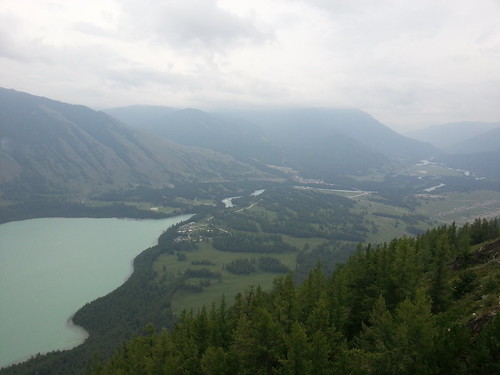
View over the southern end of Lake Kanas
From Kashgar we took a plane to Urumqi, stayed there overnight and then took a morning flight to Kanasi. Boarding the flight to Kanasi was not as easy as I had hoped: for some reason my name appeared on the boarding pass as marcmarc/vanderchijs instead of marc/vanderchijs, and the bureaucratic lady checking the boarding passes refused to let me through. I guess the recent hijacking of a flight to Urumqi may have made them more alert, because I have traveled all over China with misspelled names many times.
Trying to solve this problem was not very easy, and I had to get back to the check-in area. One person referred me to another, and that person had no clue how to solve it either. I was ready to just buy a new ticket in order to get on the plane, but decided to first ask for the manager. That’s often the only way to solve problems in China, and this time it worked as well. I explained the manager the problem and that I was on the flight with a friend who was already waiting to board, and that my luggage was on board as well. That last part is important, because it means they would have to unload all luggage to search for my bag, something that takes time and might delay the flight. The guy was pragmatic and just manually changed my name on the boarding pass and put a chop on it. I then ran back to the long security check line, walked around it to the front (with people shouting angrily at me, and me completely ignoring them), and managed to get to the plane just in time to board.
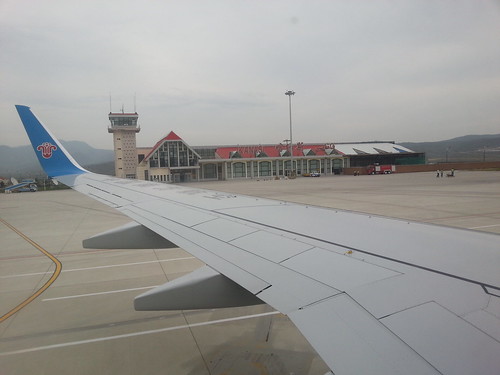
Kanasi airport, located in the middle of nowhere
The flight was short and uneventful, less than 50 minutes with a beautiful view. But even though it was short it was quite expensive, the first hint of what was to come…
Upon arrival at Kanasi airport we had planned to take a taxi to our hotel, which was located next to Lake Kanas. Problem was, there are no taxis in Kanasi. But of course entrepreneurial locals were willing to drive us to the entrance gate of the Kanasi National Park (not our hotel!) for the princely sum of RMB 800. We managed to get that down to RMB 600 (about USD 100), which is still outrageously expensive for a one hour drive.
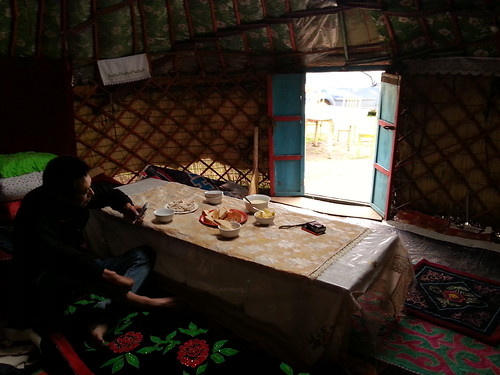
Lunch in a yurt
We had lunch in a yurt close to the entrance of the national park, RMB 170 for some simple local food with milk tea and some fermented horse milk (which tastes as bad as it sounds). Then we bought tickets to get into the park, which cost us RMB 230 per person (USD 36). This is just the basic price, if you want to visit some of the attractions (like climb up to a view point) you will need to pay additional money each time. I don’t mind paying for things, but it felt like a total rip-off to me. Everything is at least a factor 3 more expensive than it would be in the rest of China.
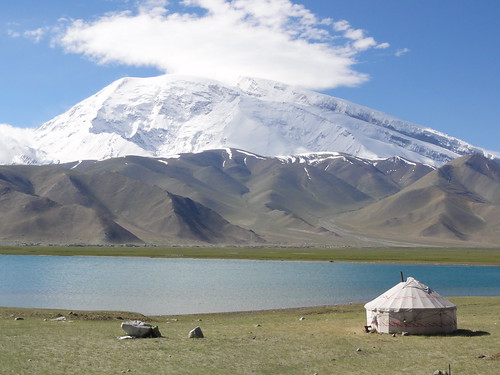
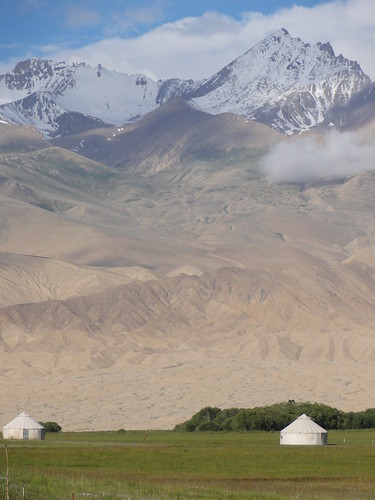
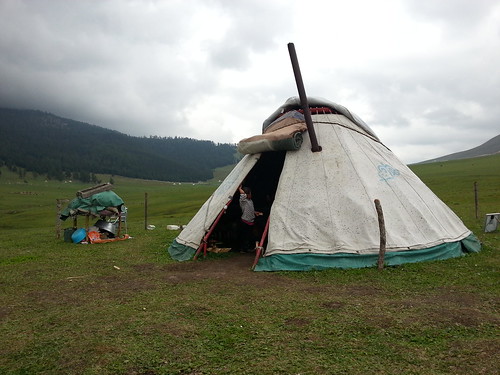 Yurt on the grasslands, most nomads here live in these tents with their extended family
Some more examples: our hotel was RMB 2000 per person per night for a standard room (> USD 300). It wasn’t bad, but for that price you get a 5-star hotel in downtown Shanghai or Beijing. Of course nothing was included in the price, a simple dinner (3 dishes with a beer) came to RMB 900 for 2 persons. This would be max RMB 150-200 in Shanghai.
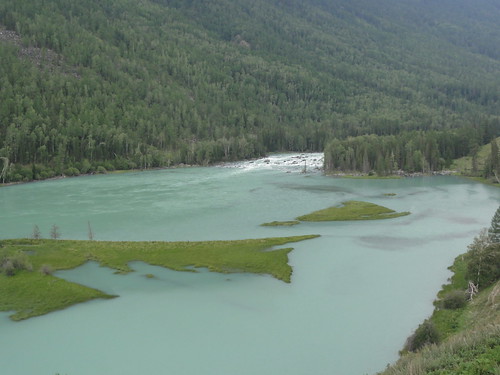
The river south of Lake Kanas, beautiful colors!
The next day we managed to get a car to drive us from the hotel to the airport with a side trip to the Kazakhstan border (which did not work out, we were stopped at a roadblock where we had to pay RMB 300 per person, and then the soldiers told us that the area was closed to foreigners). We had to pay RMB 3000 for the car trip (which is almost USD 500) for a distance of not more than 150 km. You have no choice, either you pay or you have to find your own way of transportation. If you’re on a tour group it’s not a big deal, because you have your own bus, but individual travelers have to pay top dollars for the experience if they don’t want to be put into buses with other tourists. Anyway, we can afford it and we just paid for it, but it leaves a bad taste in my mouth and I will not recommend anybody to visit the area as an individual.
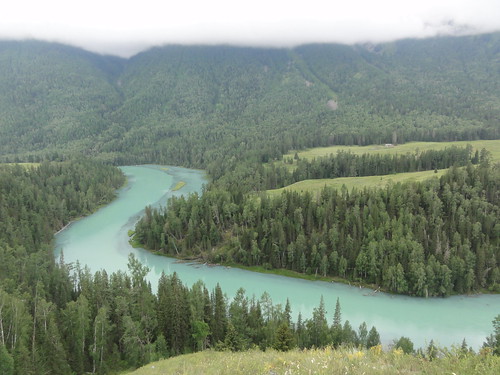
The river winds from Lake Kanas to the south
That being said, the area itself is beautiful. The nature is stunning, it’s a bit like Switzerland before people starting building houses on the lakes and before roads were built through the forests. Lake Kanas is huge and it has the added attraction of the fact that a monster is sometimes spotted in the lake. We didn’t see the monster and even went for a swim (probably not allowed) in the lake. However, when I got back I heard that the day after we left the monster was seen again. Too bad we missed that one, I don’t believe in monsters and would have liked to see with my own eyes what it could have been.
There is not a lot to do around Lake Kanas and everything is catered to mass Chinese tourism. From the entrance of the national park you have to take a tourist bus to Lake Kanas itself. A typical Chinese experience with a loud tour guide that kept on talking and tourist that tried to take a picture of every tree in the forest that we drove through. When the tour guide finally stopped talking he put on a DVD of Lake Kanas with loud Richard Clayderman music. Time to get out my earplugs!
I did not see any other non-Chinese during our 2 days at the lake. Just thousands of Chinese in tour groups being herded from one sight to another. I had hoped for some good hiking trails, but I could no find them (I am sure they are there, but there are no signs). It would be a great place for mountain biking as well, except for the fact that there are no bikes for rent.
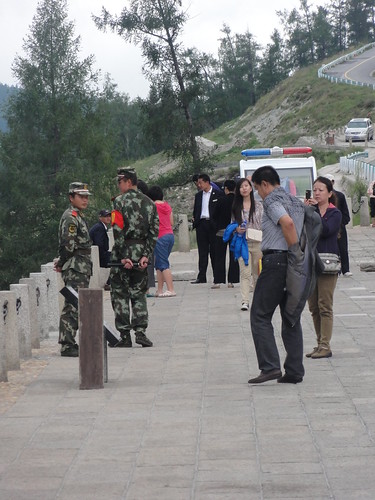
Military police everywhere, I felt watched constantly
But what there is, is a lot of military presence. There are several road blocks on the road between the airport and Kanasi, and the whole area seems to be run by military police. I felt a bit uncomfortable to see them everywhere. They stop cars driving to the national park, they check IDs and passports while entering the park, and at every place with a nice view 2 soldiers or military police are observing the tourists. For me it ruined the experience a bit, nature may be beautiful but with these fellows around it doesn’t feel like a real holiday anymore.
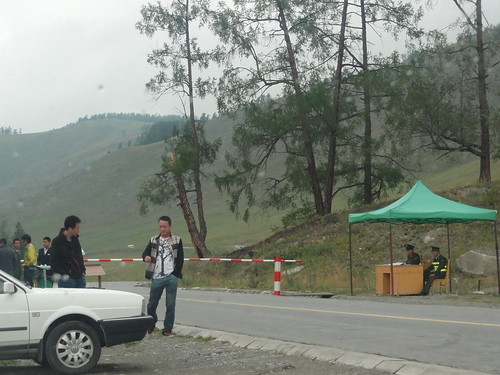
Roadblock close to the Kazakhstan border (taken from the car, they don’t like people taking pictures)
The good thing is that we had a hotel at the lake. Most tourists stay outside the park in hotels, which is probably much cheaper, so after the last groups leave around 8 pm it is suddenly very quiet. Gary and I went for a hike along the lake front around 9:30 PM and did not see a single soul. That walk was actually the highlight of the trip to Kanasi for me, finally no other people nor military around so we could enjoy the natural scenery on our own. There was a boardwalk through the woods along the lake, which was easy to walk on especially when it got dark around 10:30 PM.
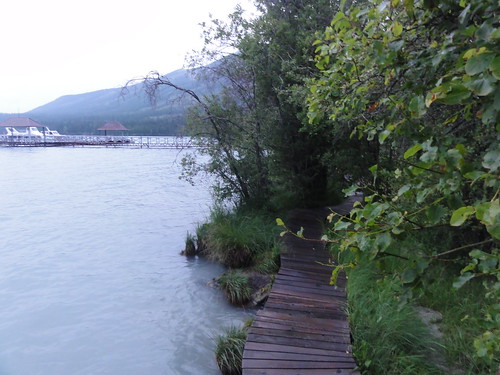
Board walk along Lake Kanas
I had expected Kanasi to be a peaceful, quiet place, but except for late evening it was very different from what I had expected. I learned from a Facebook friend that the military moved in a few years ago and started running the place. Since then it’s not a location you want to visit anymore, at least not as an independent traveler interested in seeing nature. Sure, nature is still amazing here, but all the beautiful spots are full of tourists now and you have to pay a lot of money to see them. And as usual in China the tour operators and guides make up stories about unusual rocks formations or islands in the river with a special shape (“they are the footsteps of Zhengis Khan”), and I don’t want to be forced to listen to that.
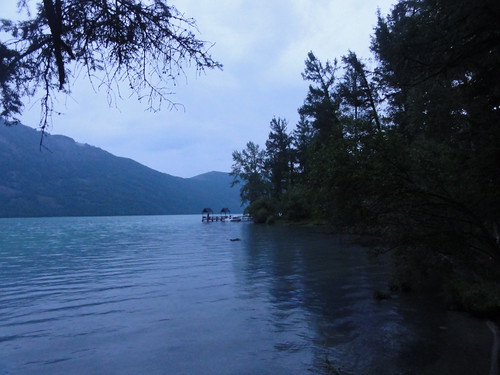
Lake Kanas after sunset, no monster in sight!
Kanasi was an interesting experience but it’s a tourist trap, and for the cost of going there for a few days you can almost fly to Switzerland and have a similar experience. After one night Gary and I decided we had seen enough and booked a flight back to Urumqi. At the airport we were lucky: we arrived at 3:30 and were told that our flight would be delayed but that we could still get on the 3:40 flight that was boarding already! I don’t think I have ever been in the air within 15 minutes of arriving at an airport. Luckily no extra charge for that.
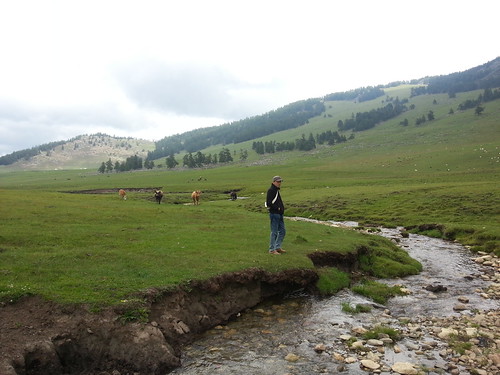
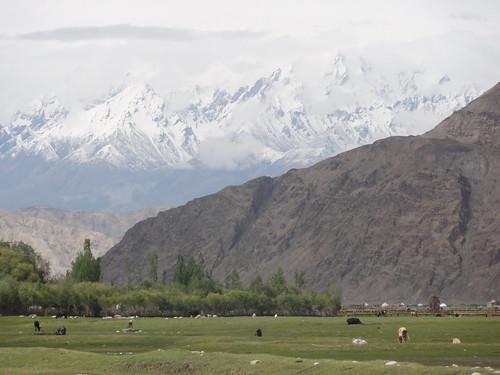
Hiking in the valley to Hemu village, lots of cows and sheep running around freely
This is part 3 of a series of blog posts about my trip to Xinjiang last week. The 4th (and last) post will be about Urumqi, the capital of Xinjiang province. The first 2 posts were about Kashgar and the Karakoram Highway, I also created a set of some of the pictures that I took during the trip.